Great Bengal famine
Mass hunger during the East India Company's early revenue rule in Bengal.
- When
- 1769–1770
- Where
- Bengal and Bihar
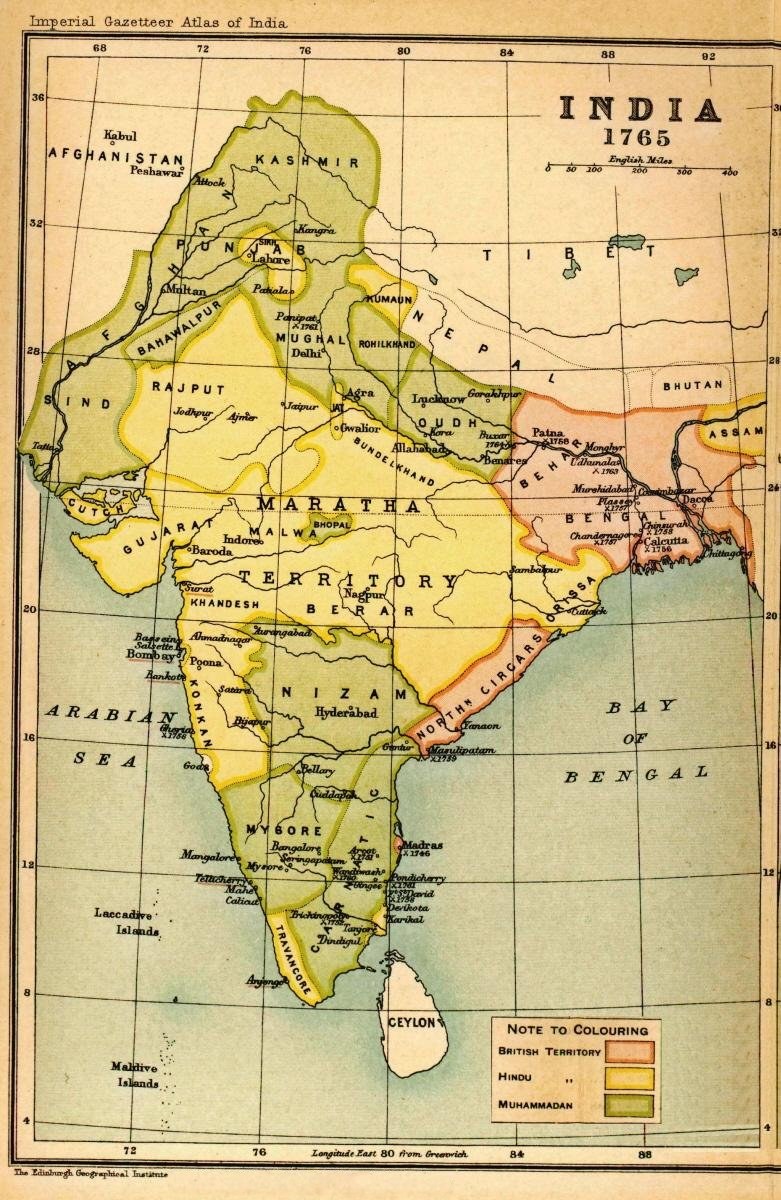
Mass hunger during the East India Company's early revenue rule in Bengal. The East India Company gained Bengal's revenue-collection rights in 1765, while administrative responsibilities remained divided. Harvest failure struck a population whose access to food depended on land, prices and purchasing power.
Background
A divided colonial administration
The East India Company gained Bengal's revenue-collection rights in 1765, while administrative responsibilities remained divided. Harvest failure struck a population whose access to food depended on land, prices and purchasing power. The new revenue system and the priority given to receipts shaped how officials responded to worsening scarcity.[1]
What happened
- 1769–1770
Failure becomes famine
Poor rains and crop losses reduced supplies. Prices rose beyond what many households could afford, forcing people to sell assets, move or go without food. Hunger and disease compounded one another. Relief was inadequate to prevent widespread death, and the burden of taxation did not disappear with the harvest.[1]
- After 1770
Depopulation and disrupted cultivation
Deaths and migration left settlements and farmland depleted. Recovery involved more than the return of rain: households had lost workers, livestock, seed and financial security. Colonial officials also viewed the catastrophe through its effect on revenue and cultivation, producing records with administrative priorities rather than comprehensive victim lists.[1]
Impact & evidence
Scale is clear; precision is not
A traditional estimate gives ten million deaths, often described as a third of the population. Modern demographic historians have questioned the evidence behind that figure and proposed much lower totals. It should therefore be identified as a contested historical estimate, not a verified count. Mortality and migration both contributed to recorded depopulation.[2]
Aftermath & legacy
A test of corporate government
The famine became central to criticism of Company rule. Its history shows why a drought explanation alone is insufficient: institutions determined taxation, relief and access to grain. It is distinct from the Bengal famine of 1943, which occurred under different wartime conditions more than a century later.[1]
Sources & image credits (2)
- Wikipedia — Great Bengal famine of 1770 ↗
- Geographical Review — East India Company and the 1770 famine ↗
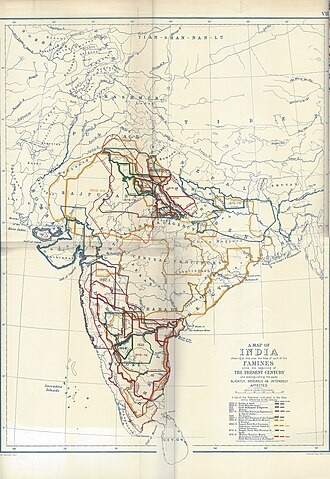
J. G. Bartholomew and Sons. Edinburgh · GFDL (source record). Resized for display. Image source ↗