Battle of Buxar and the Bengal revenue settlement
A military victory converted into East India Company revenue power.
- When
- 1764–1765
- Where
- Buxar and Bengal, South Asia
A military victory converted into East India Company revenue power.
Background
A company seeking political control
The East India Company’s position after Plassey remained contested. Mir Qasim, the ruler of Awadh and the Mughal emperor formed an alliance against it. Commercial privileges, military power and the authority to collect revenue were inseparable stakes in the conflict.[1]
What happened
- October 1764
Defeat at Buxar
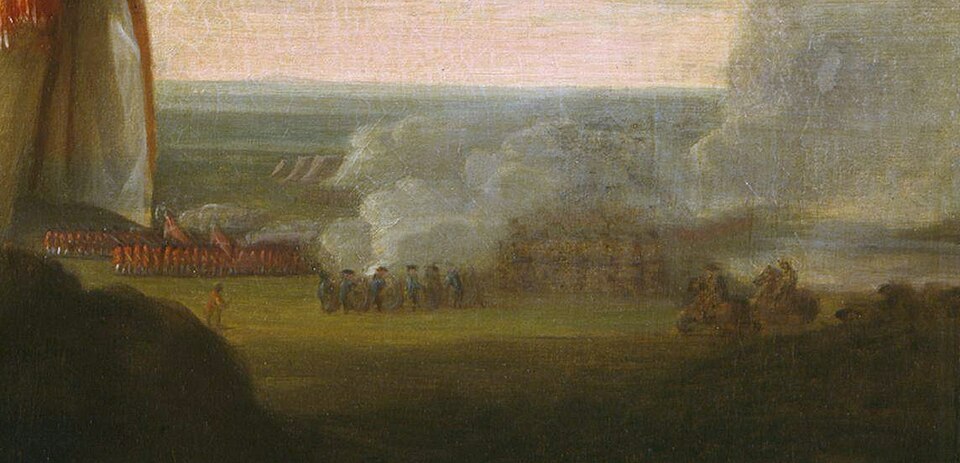
Company troops under Hector Munro defeated the allied forces. The result weakened the powers able to challenge the Company in the region and strengthened its hand in subsequent negotiations.[2]
- 1764
An alliance defeated
The opposing coalition joined Mir Qasim’s effort to recover power in Bengal with the forces of Shuja-ud-Daula of Awadh and Mughal emperor Shah Alam II. Their defeat mattered because it weakened several authorities together, rather than merely replacing one provincial ruler with another.[1]
Impact & evidence
Revenue rights followed
The Allahabad settlement secured the Company’s diwani, or revenue-collection authority, in Bengal, Bihar and Orissa. This gave a commercial corporation access to resources on a scale that sustained further military and administrative expansion.[1]
Aftermath & legacy
Conquest through fiscal institutions
The significance of Buxar lies beyond the battlefield. Control over taxation reshaped relations between cultivators, local authorities and the Company. It helped turn trading influence into territorial rule while allowing older political offices to survive in altered, subordinate forms.[1]
Sources & image credits (2)
David Martin · Public domain Image source ↗