Mapuche resistance and the Arauco War
Mapuche resistance preventing lasting Spanish conquest of much of southern Chile.
- When
- 16th–17th centuries and the colonial frontier
- Where
- South-central Chile
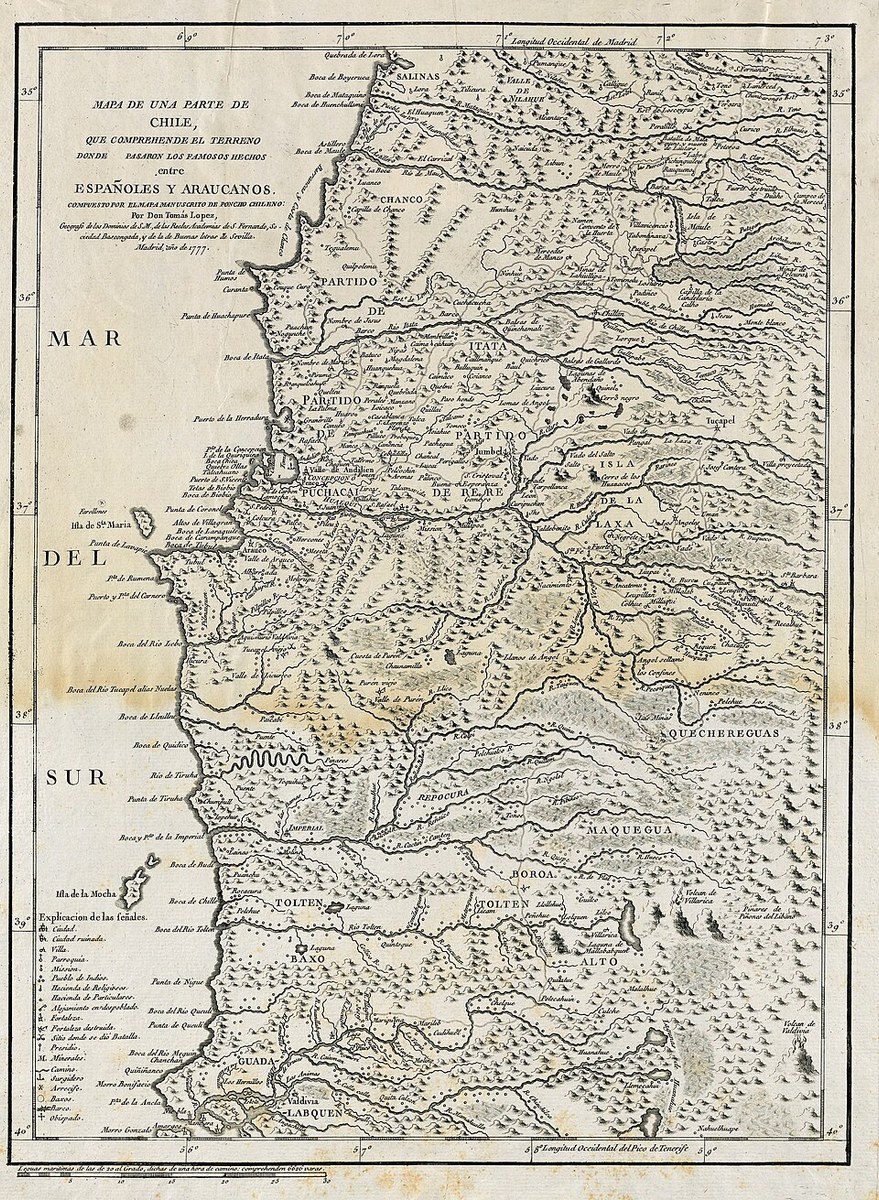
Mapuche resistance preventing lasting Spanish conquest of much of southern Chile. Spanish colonisation advanced through settlements, demands for labour and attempts to control territory. Mapuche communities resisted these impositions, adapting their military organisation and use of horses.
Background
Settlement met resistance
Spanish colonisation advanced through settlements, demands for labour and attempts to control territory. Mapuche communities resisted these impositions, adapting their military organisation and use of horses. The conflict later called the Arauco War involved changing alliances and political interests rather than two unchanging, unified societies.[1]
What happened
- 1550s onward
Repeated campaigns
Mapuche victories, including the defeat of Pedro de Valdivia's forces, challenged Spanish expansion. Campaigns included attacks on settlements, punitive expeditions and the taking of captives. Spanish attempts to maintain towns south of the Biobío faced persistent resistance and demanding supply conditions.[1]
- 1598–1641
From destruction of settlements to negotiation
The Mapuche victory at Curalaba in 1598 was followed by the abandonment or destruction of several Spanish towns. A frontier developed in which warfare coexisted with commerce and diplomacy. The 1641 parliament at Quillín was an important negotiated settlement, though it did not end every conflict or erase disputes over authority.[1]
Impact & evidence
Survival beyond a simple war narrative
Chile's National Library cautions against imagining three uninterrupted centuries of warfare. Exchanges, negotiations and daily relationships also shaped frontier society. Mapuche resistance preserved substantial autonomy for a long period; this should not be confused with the later Chilean state's 19th-century occupation of Araucanía.[2]
Aftermath & legacy
A history that did not end with Spain
Mapuche political and cultural continuity outlasted Spanish colonial rule. Later land dispossession and present-day claims belong to a continuing history but have distinct causes and timelines. Keeping those periods separate helps explain both the effectiveness of early resistance and the different state powers communities subsequently confronted.[1]
Sources & image credits (2)
Tomas Lopez compuesto por el mapa manuscrito de Poncho Chileno, Madrid 1777 · Public domain (source record). Resized for display. Image source ↗