Ancash earthquake and Yungay avalanche
An earthquake devastated communities across Áncash and triggered a mountain avalanche that buried Yungay and part of Ranrahirca.
- When
- 31 May 1970
- Where
- Áncash, Peru
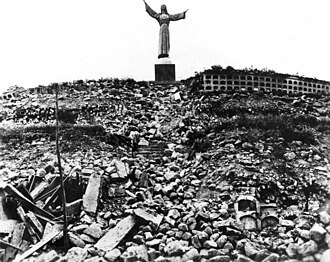
An earthquake devastated communities across Áncash and triggered a mountain avalanche that buried Yungay and part of Ranrahirca.
Background
Communities below unstable mountains
The earthquake affected a large area of west-central Peru. In the high Andes, steep relief created additional hazards: shaking could release enormous masses of rock and ice above inhabited valleys.[2]
What happened
- 31 May 1970
Huascarán collapses
A debris avalanche descended from the north peak of Huascarán. It crossed the valley at destructive speed, burying Yungay and part of Ranrahirca. This was one component of a regional earthquake disaster, not the entire affected area.[2]
Impact & evidence
About 70,000 deaths reported in July 1970
USGS Circular 639 cites Peru’s National Emergency Committee estimate of 2 July 1970: about 70,000 deaths and 50,000 injuries across roughly 65,000 square kilometres. This is a regional earthquake-disaster estimate, not the number killed in Yungay alone. The report estimated approximately 186,000 buildings destroyed or made uninhabitable. Different reports revised totals as information emerged.[3]
Aftermath & legacy
Burial ground and rebuilding
The buried town became a place of remembrance, while survivors rebuilt nearby. The disaster illustrates how an earthquake can produce lethal secondary hazards far from the epicentre. Reconstruction involved livelihoods and displaced communities as well as replacement buildings.[1]
Sources & image credits (3)
- Wikipedia — 1970 Ancash earthquake ↗
- USGS: geological aspects of the 1970 Peru earthquake ↗
- USGS Circular 639: preliminary report, citing Peru’s emergency committee, 2 July 1970 ↗
U.S. Geological Survey Image source ↗