Aceh War
Decades of Dutch invasion and counterinsurgency devastated Aceh while attempting to extinguish its independence.
- When
- 1873–1914, with resistance continuing afterward
- Where
- Aceh, northern Sumatra, Indonesia
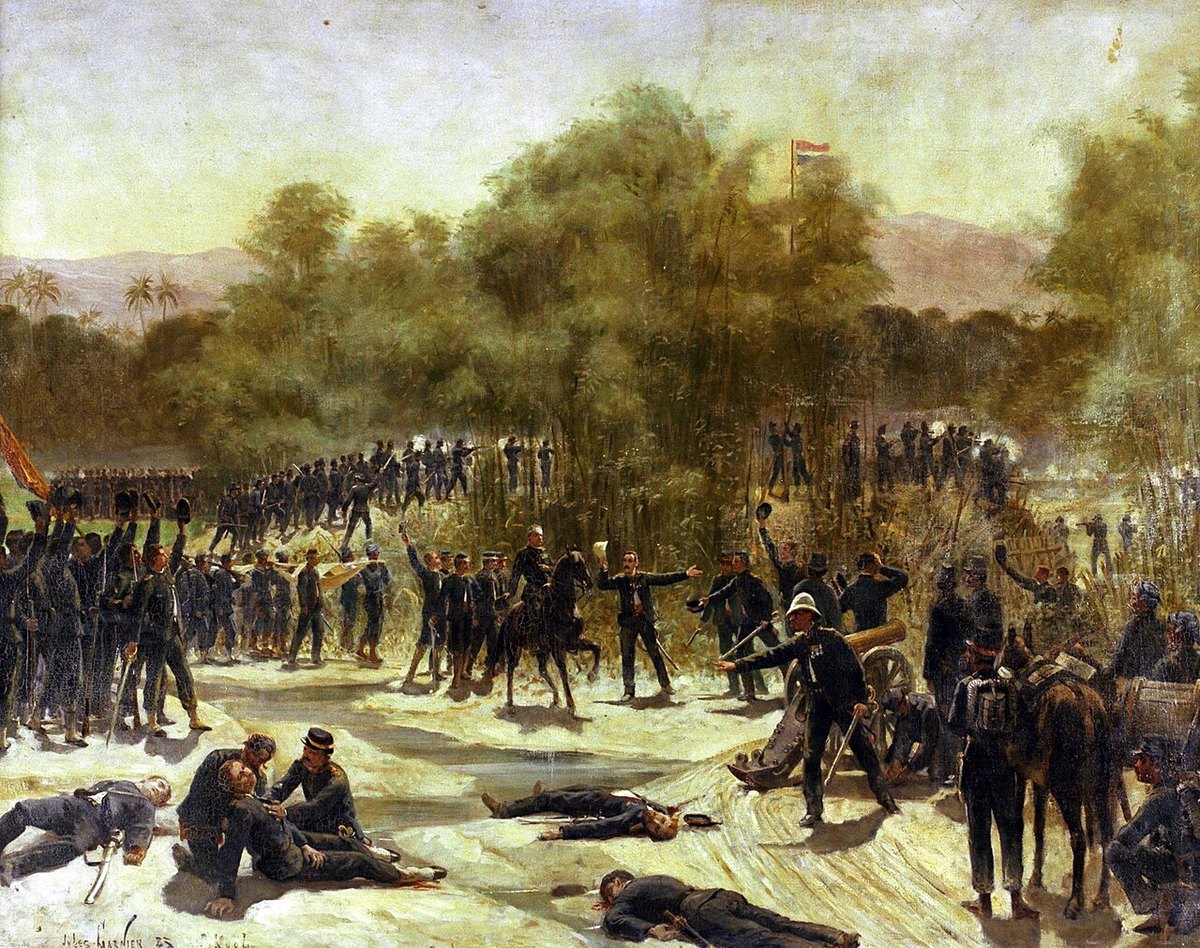
Decades of Dutch invasion and counterinsurgency devastated Aceh while attempting to extinguish its independence.
Background
An independent sultanate targeted
Aceh occupied a strategic position at the entrance to the Strait of Malacca. Dutch ambitions to consolidate control over Sumatra conflicted with the sultanate's independence and international diplomacy. The invasion was a project of imperial expansion, not simply an internal policing operation.[1]
What happened
- 1873–1874
Invasion and occupation
An initial Dutch expedition failed, but a renewed invasion captured the royal centre. Occupying a capital did not secure the countryside. Resistance continued through decentralised networks, religious leadership and guerrilla warfare, extending the conflict far beyond the opening campaigns.[1]
- 1890s–1900s
Counterinsurgency and village destruction
Dutch forces combined political agreements with mobile military campaigns. Attacks on settlements killed civilians as well as fighters. Estimates of Acehnese deaths vary and include losses through disease as well as violence; no single precise total captures every phase of the conflict.[1]
Impact & evidence
Celebrating conquest in Europe
The Rijksmuseum once displayed an Aceh war monument and captured weapons as symbols of Dutch military honour. Such displays obscured the suffering and dispossession through which the objects were acquired. Their later reinterpretation exposes how museums helped give conquest a respectable public image.[2]
Aftermath & legacy
Resistance, memory and restitution
The conventional endpoint of 1914 does not mean all resistance stopped. Objects taken during the war remain part of debates over ownership, return and whose interpretation museums present. Acehnese accounts and the circumstances of seizure are essential to understanding collections once described merely as trophies or ethnographic material.[3]
Sources & image credits (3)
- Wikipedia — Aceh War ↗
- Rijksmuseum: exhibiting colonialism and the Aceh war monument ↗
- IIAS: objects from Aceh in Dutch museums ↗
Geschilderd naar Jules Garnier (Collectie Koninklijk Huisarchief in bruikleen aan museum Bronbeek) Image source ↗