Acadian expulsion
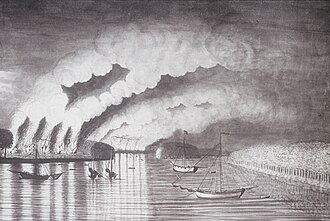
British authorities deported thousands of Acadians, dispersing families and destroying established communities.
- When
- 1755–1764
- Where
- Acadia and destinations across the Atlantic
British authorities deported thousands of Acadians, dispersing families and destroying established communities.
Background
A population caught between empires
French-speaking Acadians lived under changing British and French claims in northeastern North America. British officials questioned their loyalty and pressed for oaths of allegiance. In 1755, imperial conflict became the justification for removing a civilian population from its homes and farms.[1]
What happened
- 1755
Deportations begin
British authorities detained residents and transported families away from Acadia. Communities around Grand-Pré were among those affected. Dispersal, separation and the destruction of settlements limited people's ability to return or sustain the social networks on which their livelihoods depended.[2]
- After 1763
Return under changed conditions
The end of the Seven Years' War allowed some Acadians to return, but they did not simply regain the communities and land they had left. Others built lives elsewhere, including in Louisiana. The dispersal produced distinct Acadian and Cajun histories rather than a single route of exile.[2]
Impact & evidence
More than 10,000 deported
Parks Canada's commemorative account places the number deported at more than 10,000, roughly three quarters of the Acadian population in the present-day Maritime provinces. This is a displacement estimate, not a death toll. People also died during transport and exile, but those losses require their own evidence.[3]
Aftermath & legacy
Remembering Le Grand Dérangement
Commemoration at Grand-Pré and elsewhere recognises an expulsion once defended as military necessity. Acadian memory preserves family rupture alongside cultural persistence. The event belongs in histories of British imperial coercion and civilian displacement, while its consequences extend beyond the formal years of deportation.[2]
Sources & image credits (3)
- Wikipedia — Expulsion of the Acadians ↗
- Parks Canada: Expulsion of the Acadians ↗
- Government of Canada: commemoration of the expulsion ↗
Thomas Davies Image source ↗