Yellow fever vaccine development
The development of the 17D vaccine provided a powerful tool against yellow fever.
- When
- 1930s
- Where
- Rockefeller Foundation laboratories and international public health
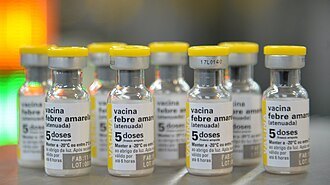
The development of the 17D vaccine provided a powerful tool against yellow fever.
Background
A dangerous mosquito-borne infection
Yellow fever caused severe outbreaks in tropical regions and disrupted cities, travel and work. Mosquito control helped reduce transmission but did not eliminate the need for immunological protection. Vaccine development required weakening the virus while retaining its ability to provoke a protective response.[1]
What happened
- 1937
The 17D strain
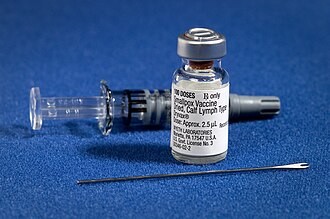
Max Theiler and colleagues developed the attenuated 17D strain through laboratory passage. It became the basis of a widely used vaccine. This was a team-based research and production achievement, even though Theiler later received the Nobel Prize for his contribution.[3]
Impact & evidence
Laboratory work translated into prevention
The vaccine enabled protection against a disease for which outbreak control had relied heavily on limiting mosquito exposure. Its development was recognised by the 1951 Nobel Prize in Physiology or Medicine. Recognition of the research is distinct from a claim that yellow fever had been eradicated.[2]
Aftermath & legacy
Vaccination did not end the disease
Yellow fever persists through ecological transmission cycles, and outbreaks continue where immunity and vector control are insufficient. Manufacturing, supply and organised campaigns determine how a successful vaccine translates into population protection. The 1930s breakthrough remains consequential without being described as a complete solution to every outbreak risk.[1]
Sources & image credits (3)
- Wikipedia — Yellow fever vaccine ↗
- Nobel Prize: Max Theiler's work and recognition ↗
- Journal of Experimental Medicine: Theiler and the yellow fever vaccine ↗
Agência Brasil Fotografias Image source ↗