Vietnam's Temple of Literature and examinations
The Temple of Literature preserves a long history of Confucian education and the names of successful royal examination candidates.
- When
- From 1070; surviving examination records cover 1442–1779
- Where
- Hanoi, Vietnam
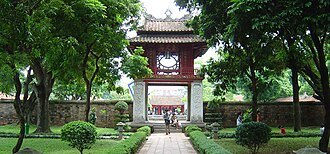
The Temple of Literature preserves a long history of Confucian education and the names of successful royal examination candidates.
Background
Education and service to the state
Hanoi's Temple of Literature was founded in 1070, with an associated academy established soon afterward. Confucian learning linked ethical cultivation and literary study to government service. The institution belongs to Vietnam's own political and educational history, not merely a borrowed architectural tradition.[1]
What happened
- 1484–1780
Examinations commemorated in stone
The surviving 82 steles were erected to commemorate royal examinations held between 1442 and 1779. The dates of an examination and the erection of its stele are therefore not always the same. Inscriptions record successful candidates and statements about learning and government.[2]
Impact & evidence
Names, ideals and selection
The stones preserve information about people who passed a highly selective system. They show what rulers wished to honour, while saying less about those excluded or unsuccessful. Their value is both documentary and artistic, including calligraphy and sculptural form.[2]
Aftermath & legacy
Heritage beyond an attractive courtyard
The site became an enduring symbol of scholarship. Reading its inscriptions alongside the examination system gives the buildings historical meaning. Commemoration celebrates intellectual achievement while also revealing how education supported the administration and ideals of successive dynasties.[1]
Sources & image credits (2)
- Wikipedia — Temple of Literature, Hanoi ↗
- UNESCO: stone stele records of the Lê and Mạc examinations ↗
The original uploader was Chuoibk at English Wikipedia . Image source ↗