University of Paris and medieval scholastic learning
Paris became a major centre of scholastic learning through a corporation of teachers and students with negotiated privileges.
- When
- Twelfth–fifteenth centuries
- Where
- Paris, France
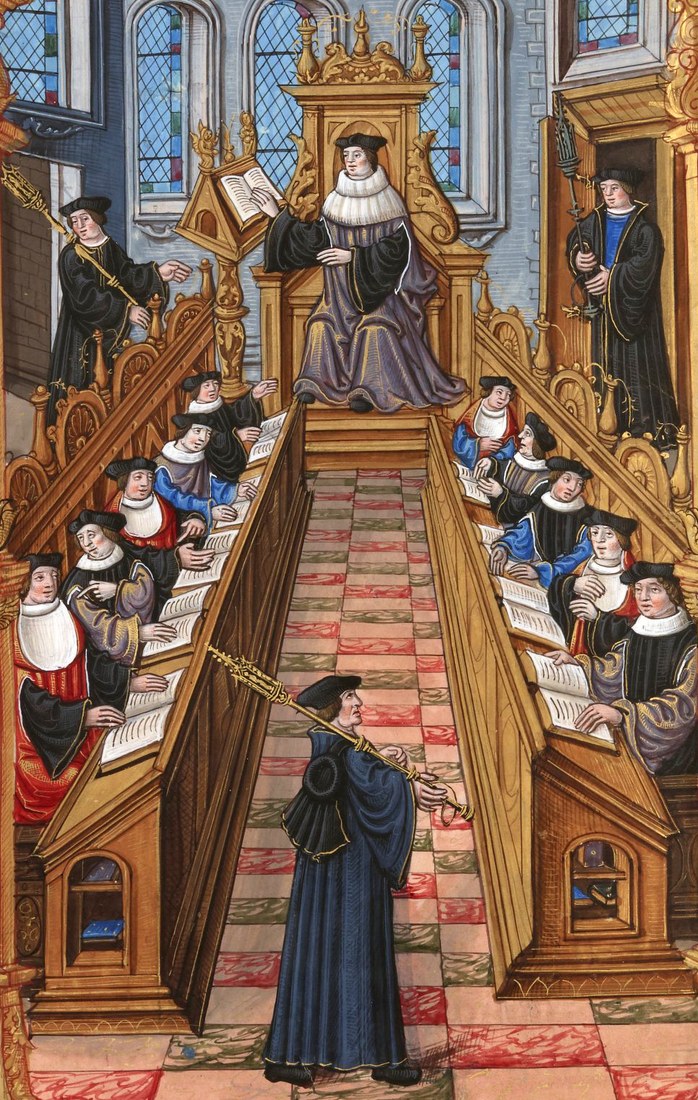
Paris became a major centre of scholastic learning through a corporation of teachers and students with negotiated privileges.
Background
Schools grew into an institution
The university emerged from an existing concentration of schools rather than being created in a single modern founding ceremony. Masters and students organised around teaching, qualifications and collective interests. Theology, arts, medicine and law developed within an institution closely connected to the Church.[1]
What happened
- 1200–1231
Privileges and autonomy
Royal and papal acts helped define the community's rights. The 1231 papal bull Parens scientiarum became an important protection for university self-government. Autonomy was negotiated within religious and political authority, not complete freedom from either.[2]
Impact & evidence
Arguments tested through questions and disputation
Teaching involved close reading, commentary and structured debate. Scholars examined tensions between authorities and developed arguments through formal questions. The method could support sophisticated inquiry while operating within boundaries enforced by ecclesiastical institutions.[1]
Aftermath & legacy
The Sorbonne was one part of a larger university
Robert de Sorbon's college became particularly influential, and its name later stood for a much wider academic tradition. Confusing the college with the entire medieval university obscures its institutional diversity. Paris helped establish durable forms of teaching and academic organisation, though access remained narrow by modern standards.[2]
Sources & image credits (2)
Étienne Colaud Image source ↗