University of Bologna and the medieval university model
Legal study and associations of students helped shape a lasting university model.
- When
- Late eleventh century onward
- Where
- Bologna, Italy
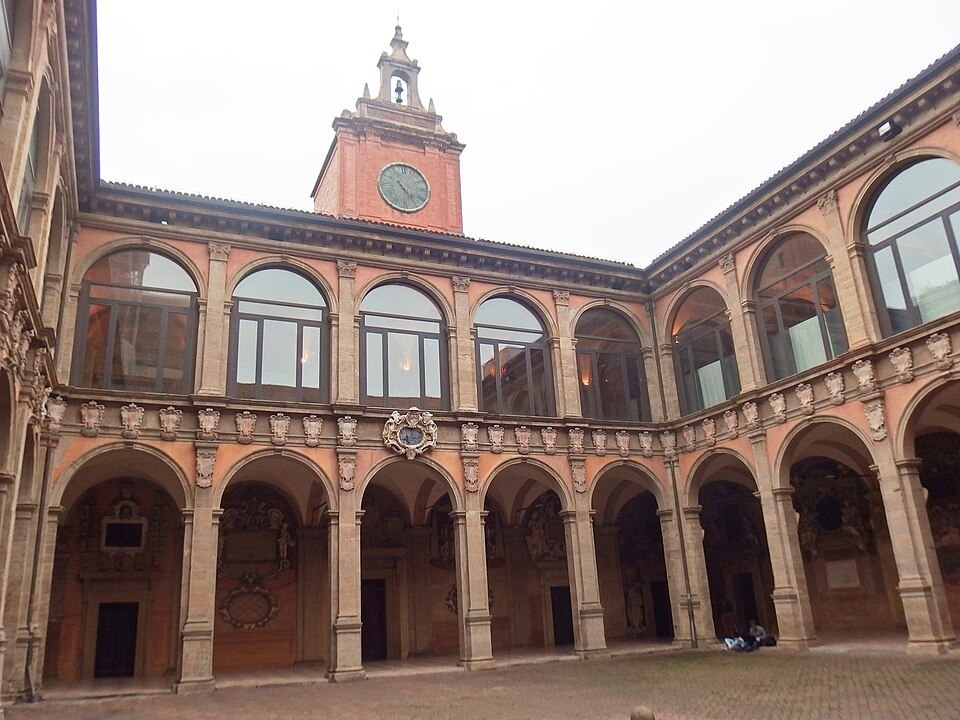
Legal study and associations of students helped shape a lasting university model.
Background
Learning within a growing city
Bologna's emergence as a centre of legal study was tied to an expanding urban society. Teachers examined Roman law and later canon law, attracting students who needed sophisticated legal knowledge for a changing political and administrative world.[2]
What happened
- Around 1088
A conventional founding date
The university uses 1088 as its traditional foundation year. The institution developed gradually rather than appearing through a single surviving founding charter on that date. Teaching relationships and organised communities acquired more durable forms over time.[2]
Impact & evidence
Students organised collectively
Associations helped students protect their interests in a city where many were outsiders. Their role in university organisation makes Bologna important to the history of institutions as well as the history of individual scholars.[2]
Aftermath & legacy
An influential model, not the beginning of all learning
Bologna became a reference point for European universities and legal scholarship. That importance does not make it the origin of advanced education everywhere: different institutions flourished earlier in other societies. Its distinctive contribution lies in the particular corporate and legal forms that developed there.[1]
Sources & image credits (2)
Palickap · CC BY-SA 4.0 Image source ↗