Identification of the tuberculosis bacillus
Robert Koch demonstrating the bacterial cause of tuberculosis.
- When
- 24 March 1882
- Where
- Berlin, Germany
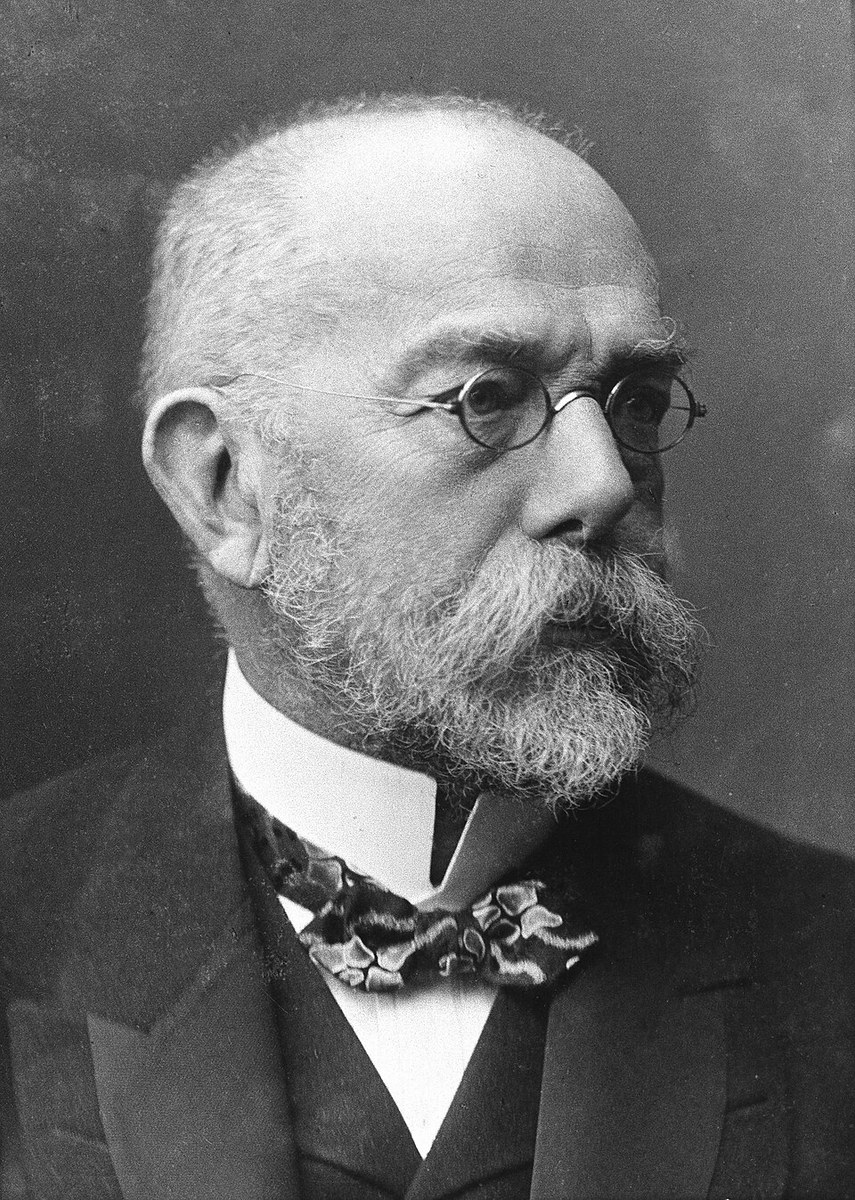
Robert Koch demonstrating the bacterial cause of tuberculosis. Tuberculosis caused extensive illness and death, but theories of heredity, environment and contagion competed to explain it. Establishing a specific infectious agent required more than seeing something in diseased tissue.
Background
A widespread disease with disputed causes
Tuberculosis caused extensive illness and death, but theories of heredity, environment and contagion competed to explain it. Establishing a specific infectious agent required more than seeing something in diseased tissue. Researchers needed methods to distinguish the organism and connect it convincingly with the disease.[1]
What happened
- 1882
Staining, culture and experimental evidence
Koch developed techniques that made the bacillus visible and combined observation with cultivation and animal experiments. He presented the results in Berlin on 24 March. The argument brought several kinds of evidence together to identify a particular microorganism as the cause.[1]
- After the announcement
A new basis for investigation
The discovery supported diagnosis, transmission research and public-health measures directed at infection. It did not immediately provide an effective cure. Later vaccines and antibiotic treatment belonged to separate stages in the struggle against tuberculosis.[1]
Impact & evidence
Knowing the agent changed the questions
Identification allowed researchers to investigate how disease spread and how it might be detected or prevented. Laboratory evidence alone could not solve the social conditions that sustained transmission, including overcrowding, poverty and barriers to care.[2]
Aftermath & legacy
A landmark without a simple victory ending
Koch received the 1905 Nobel Prize for his tuberculosis research. His later tuberculin treatment initially failed to meet therapeutic expectations, illustrating the difference between discovering a cause and proving a treatment. Tuberculosis remained a major health problem despite the importance of the 1882 breakthrough.[1]
Sources & image credits (2)
Photographer unidentified · Public domain (source record). Resized for display. Image source ↗