Timbuktu's manuscript traditions
Family and scholarly collections preserving a rich written intellectual history of West Africa.
- When
- Medieval and early modern periods; continuing preservation
- Where
- Timbuktu, Mali
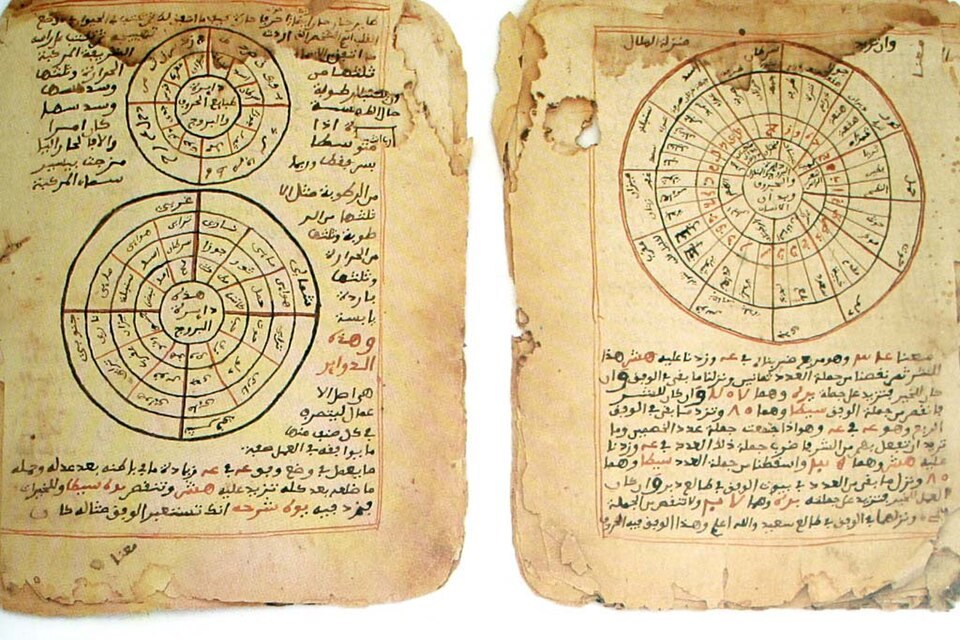
Family and scholarly collections preserving a rich written intellectual history of West Africa. Timbuktu connected Saharan trade with West African societies and wider Islamic scholarship. Teachers, students, merchants and jurists participated in intellectual exchange.
Background
A city within trading and learning networks
Timbuktu connected Saharan trade with West African societies and wider Islamic scholarship. Teachers, students, merchants and jurists participated in intellectual exchange. The manuscripts associated with the city are not the holdings of one ancient library but collections preserved across institutions and private households.[1]
What happened
- Centuries of scholarship
Texts copied, studied and debated
Manuscripts address religion, law, language, astronomy, medicine and other subjects. Marginal notes and copying traditions show active use rather than the passive storage of finished knowledge. Their diversity challenges the misconception that the region's past lacked substantial written scholarship.[1]
- 2012–2013
Collections protected during conflict
Armed occupation threatened cultural sites and manuscript holdings. Local custodians and networks moved many documents to safety, while some collections suffered damage. The rescue depended on people who had maintained relationships with the material long before international attention focused on it.[1]
Impact & evidence
Context gives manuscripts meaning
Counting documents alone does not explain their value. Provenance, language, authorship and patterns of use reveal how knowledge circulated. Conservation and digitisation can improve access, but cannot replace the interpretive knowledge of custodians and specialists.[2]
Aftermath & legacy
A living responsibility
The manuscripts link scholarship, family memory and contemporary preservation. Their history should credit local stewardship rather than portray outside institutions as discovering an unknown intellectual past. Protecting the material requires both physical care and support for the communities and research traditions that give it meaning.[1]
Sources & image credits (2)
Elias Altmimi · Public domain (source record). Resized for display. Image source ↗