The campaign to save Silent Valley
A public campaign that prevented a hydroelectric project from transforming a tropical forest.
- When
- 1970s–1985
- Where
- Kerala, India
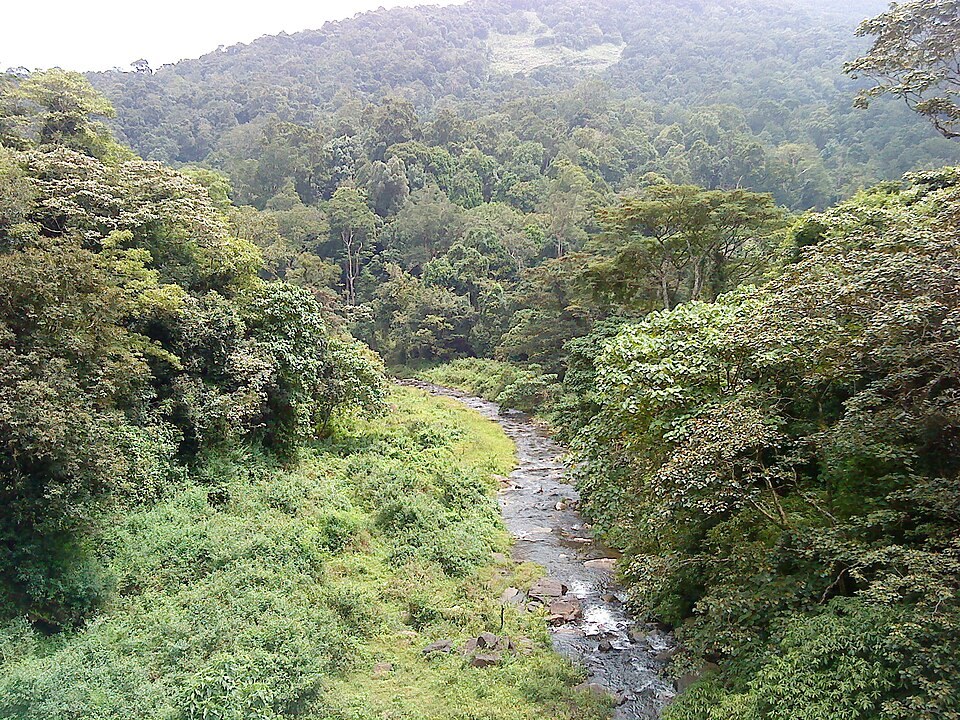
A public campaign that prevented a hydroelectric project from transforming a tropical forest. A proposed dam on the Kunthipuzha River promised electricity for Kerala. Its reservoir and associated works threatened part of Silent Valley's evergreen forest.
Background
Electricity and an irreplaceable forest
A proposed dam on the Kunthipuzha River promised electricity for Kerala. Its reservoir and associated works threatened part of Silent Valley's evergreen forest. The dispute brought a familiar development question into public debate: how should an immediate economic benefit be weighed against ecological losses that may be irreversible?[1]
What happened
- 1970s
Scientific and public opposition
Researchers, Kerala Sasthra Sahithya Parishad, writers and other campaigners challenged the scheme. The lion-tailed macaque became a prominent symbol, while scientific arguments concerned the wider forest ecosystem. Public meetings and cultural work helped carry the issue beyond specialist reports and engineering decisions.[1]
- Early 1980s–1985
The project is halted
Review and political intervention led to abandonment of the hydroelectric project. National park protection followed, with inauguration in 1985. This outcome reflected sustained pressure and contested decisions over several years rather than a single spontaneous declaration.[1]
Impact & evidence
What the decision protected
The campaign preserved a substantial habitat in the Western Ghats and prevented the proposed inundation. Its importance does not depend on describing the area as entirely untouched by people. Ecological value, local use and the consequences of infrastructure all needed to be considered together.[2]
Aftermath & legacy
A landmark in Indian environmental politics
Silent Valley became an example of scientists and public movements influencing a major project. It did not settle every tension between energy demand and conservation. It demonstrated that an approved engineering proposal could be reconsidered when its wider costs entered public and political debate.[1]
Sources & image credits (2)
Lijo Lawrance · CC BY-SA 4.0 (source record). Resized for display. Image source ↗