The Montreal Protocol
Coordinating a global phase-out of chemicals that damage the ozone layer.
- When
- 1987–1989
- Where
- International agreement
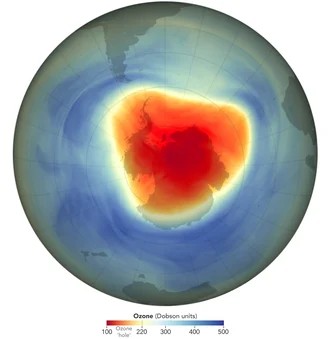
The Montreal Protocol created international controls on ozone-depleting substances. Its mechanism linked scientific assessment with changes in production and consumption, allowing countries to strengthen their response over time.
Background
A shared atmospheric problem
Chemicals released in one country could affect the ozone layer far beyond its borders. Protecting it required cooperation across industries and national jurisdictions.[1]
What happened
Impact & evidence
An agreement with changing controls
The protocol, signed in 1987 and in force from 1989, set controls on both production and consumption of ozone-depleting substances. Governments could strengthen its requirements as knowledge and alternatives developed. The 2016 Kigali Amendment extended action to phase down HFCs: these replacement chemicals do not destroy ozone but contribute to warming. That distinction separates the original ozone problem from a later climate objective.[1]
Aftermath & legacy
Collective environmental action
The agreement became a major example of international environmental cooperation. Recovery is a long process, so signing the treaty and restoring the ozone layer are not the same event.[1]
Sources & image credits (1)
NASA; Public domain; via Wikimedia Commons. Image source ↗