Pasteur's rabies vaccine
Post-exposure vaccination offered a way to prevent rabies after a suspected infectious bite.
- When
- 1885
- Where
- Paris, France
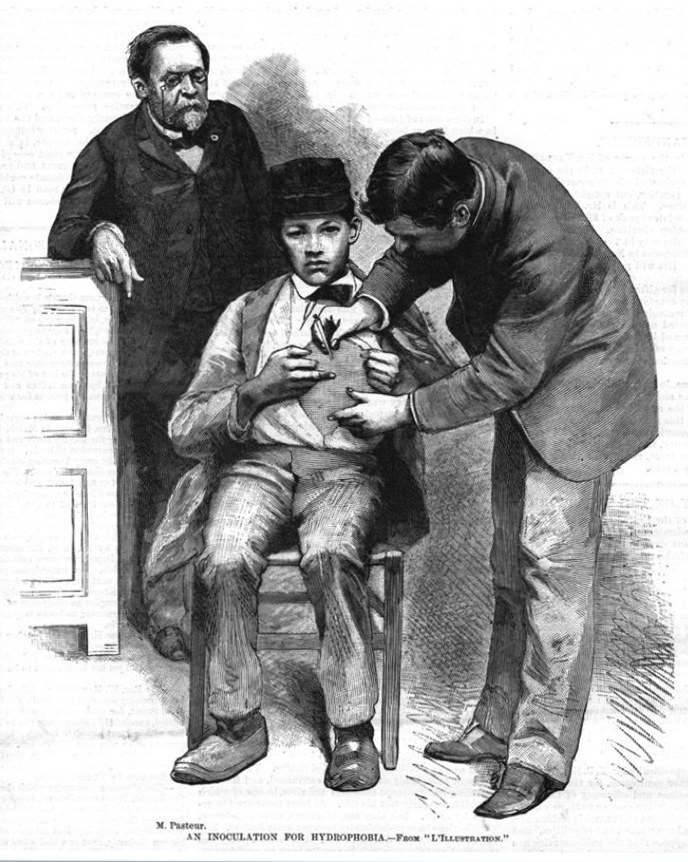
Post-exposure vaccination offered a way to prevent rabies after a suspected infectious bite.
Background
Laboratory research confronted an urgent danger
Louis Pasteur and collaborators developed an approach to rabies prevention through experimental work. Rabies presented a particular challenge because a person could appear well after a bite while facing a deadly illness later. Prevention after exposure was different from curing established symptomatic disease.[2]
What happened
- 6 July 1885
Joseph Meister began treatment
Nine-year-old Joseph Meister, brought from Alsace after multiple bites by a reportedly rabid dog, received a course of inoculations under medical supervision. His survival became the best-known early demonstration of the method and encouraged further use.[3]
- 1885
Treatment followed exposure
Joseph Meister, a child bitten by a rabid dog, received a course of inoculations in July 1885 and survived. Jean-Baptiste Jupille was treated later that year after another exposure. These early cases helped establish post-exposure prevention and attracted patients to Paris, while also raising questions about testing and responsibility in experimental medicine.[2]
Impact & evidence
Promise, uncertainty and responsibility
The case became a landmark in vaccination history. Meister’s survival was persuasive contemporary evidence, although a single treated case was not a controlled experiment. The treatment nevertheless opened a consequential approach to preventing infection after exposure.[2]
Aftermath & legacy
An institution grew from the work
Demand for treatment and international support helped establish the Institut Pasteur. The episode joined laboratory research, clinical decisions and public fundraising. Modern rabies prevention uses different preparations and treatment schedules.[3]
Sources & image credits (3)
- Wikipedia — Rabies vaccine ↗
- Institut Pasteur: first rabies vaccination in 1885 ↗
- Institut Pasteur: from rabies vaccine to the institute ↗
Unknown author Unknown author · Public domain Image source ↗