Paris climate agreement
Countries agreed a shared temperature goal and a recurring cycle of national climate plans.
- When
- 12 December 2015 and implementation from 2016
- Where
- Paris, France, and worldwide
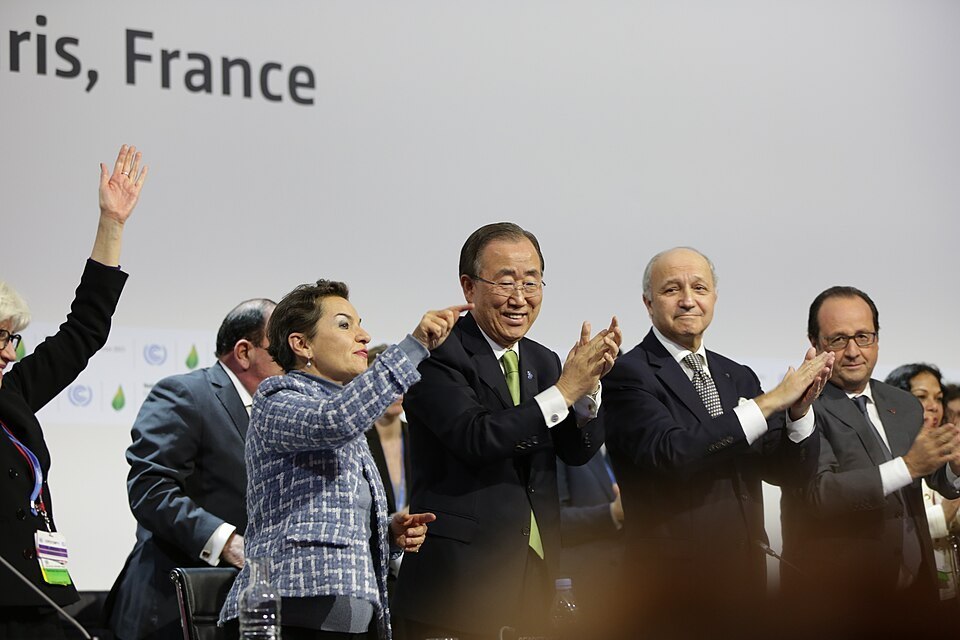
Countries agreed a shared temperature goal and a recurring cycle of national climate plans.
Background
A wider approach to climate cooperation
Negotiators sought an agreement involving countries across levels of development. Paris used nationally determined contributions within an international framework, rather than assigning every country the same emissions target from outside.[2]
What happened
- 12 December 2015
Agreement at COP21
The adopted text sought to hold warming well below 2°C above pre-industrial levels and pursue efforts toward 1.5°C. It also addressed adaptation, finance and support, connecting emissions reduction with the consequences already faced by vulnerable communities.[3]
Impact & evidence
Plans, reporting and review
Countries are expected to submit successive contributions and participate in transparency and stocktake processes. The procedural obligations do not guarantee that countries will meet every emissions target they announce.[2]
Aftermath & legacy
Implementation
The agreement created a durable basis for cooperation, but its temperature goals depend on actual changes in emissions, resilience and finance. Adoption was a diplomatic milestone; assessing success requires examining implementation rather than counting signatures alone.[2]
Sources & image credits (3)
UNclimatechange from Bonn, Germany · CC BY 2.0 Image source ↗