Launch of the National Health Service
Establishing publicly funded health services intended to make care available regardless of ability to pay.
- When
- 5 July 1948
- Where
- United Kingdom
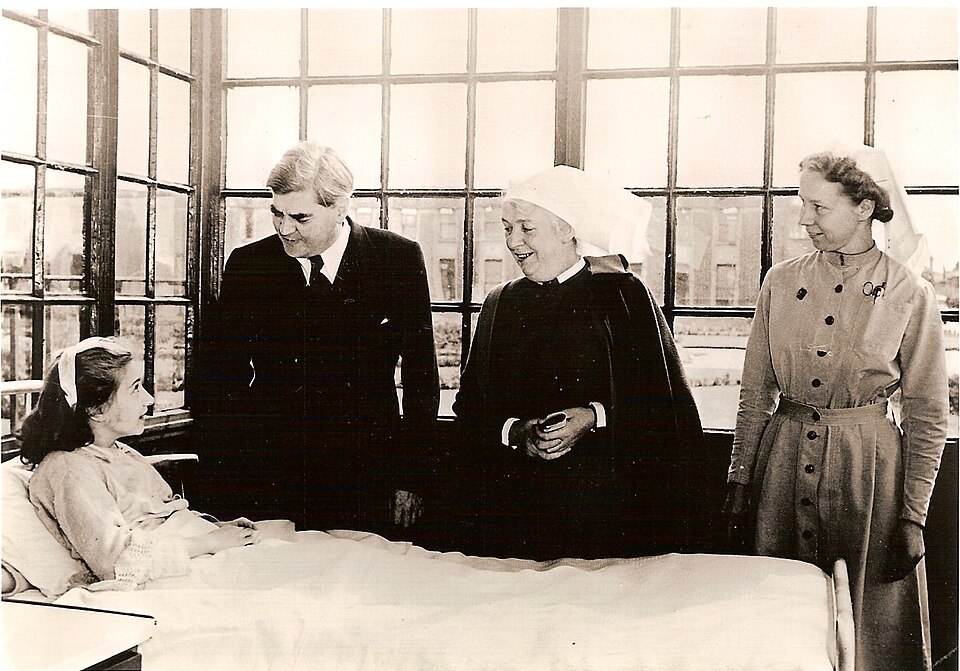
Establishing publicly funded health services intended to make care available regardless of ability to pay. Before the NHS, access depended on a mixture of insurance, local provision, voluntary hospitals and private payment. Coverage was uneven.
Background
Care before a universal service
Before the NHS, access depended on a mixture of insurance, local provision, voluntary hospitals and private payment. Coverage was uneven. Wartime experience and postwar political commitments strengthened the case for a comprehensive system, but negotiations over professional independence and institutional control were contentious.[1]
What happened
- 1940s
Legislation and negotiation
Aneurin Bevan led the creation of the service in England and Wales, while separate legislation organised services elsewhere in the UK. Hospitals, general practitioners and other providers entered a new funding and administrative framework. The NHS was not one identical institution operating under a single statute across all four nations.[1]
- 5 July 1948
Services begin
Patients gained access to a broad range of services funded collectively rather than through payment at each encounter. Staff and existing institutions were essential to making the change operational. Demand revealed previously unmet needs as people sought treatment they had delayed or could not afford.[1]
Impact & evidence
Universal access is an organising principle
The launch transformed the relationship between illness and personal finances, but did not remove shortages or inequalities in health. Charges for some services were introduced later. Distinguishing the founding principle from every subsequent funding decision avoids presenting the system as unchanged since 1948.[2]
Aftermath & legacy
An institution continually reshaped
The NHS became central to public life while undergoing repeated reorganisation. Its historical significance lies in making comprehensive care a collective responsibility. Assessing its beginnings requires attention to the staff, patients and negotiated compromises that converted legislation into a functioning service.[1]
Sources & image credits (2)
University of Liverpool Faculty of Health & Life Sciences · CC BY-SA 2.0 (source record). Resized for display. Image source ↗