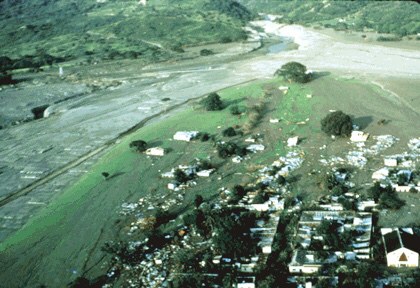
Mount St Helens eruption
A collapsing volcanic flank unleashed a lateral blast, ash and destructive mudflows.
- When
- 18 May 1980 and aftermath
- Where
- Washington State, United States
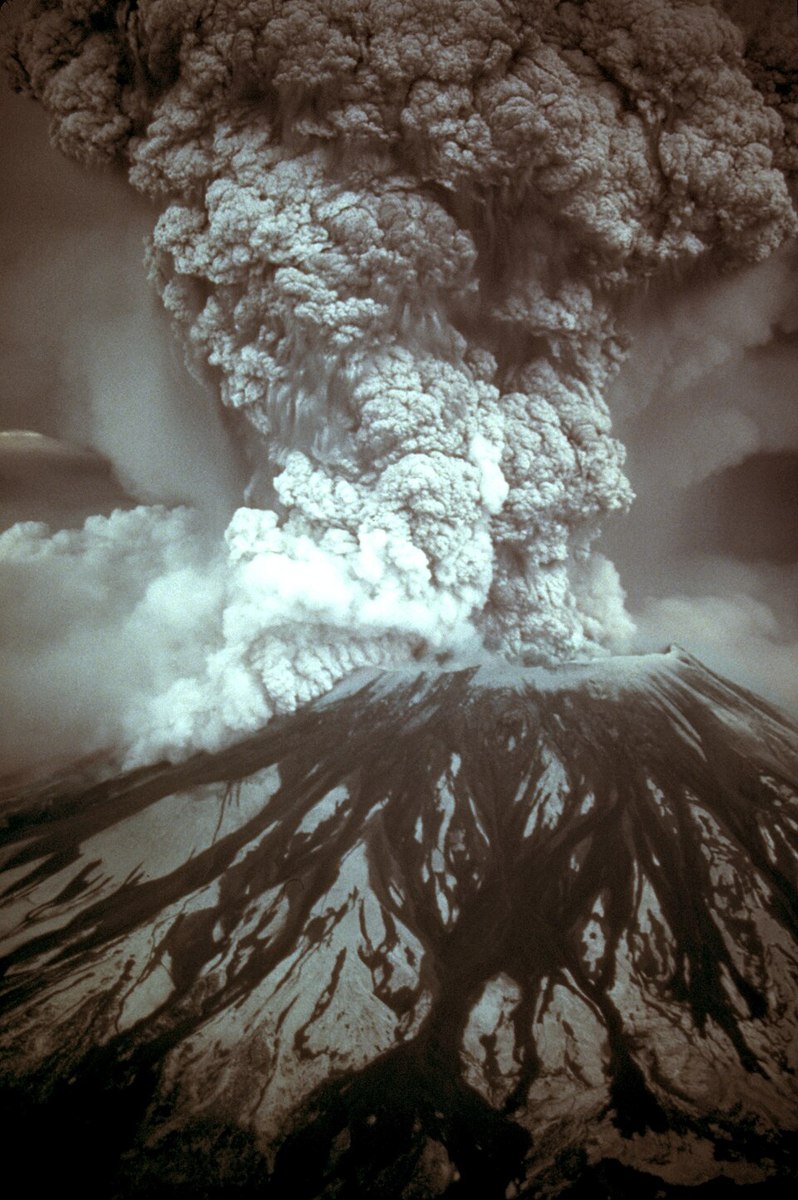
A collapsing volcanic flank unleashed a lateral blast, ash and destructive mudflows.
Background
Warning signs and a growing bulge
Earthquakes and changes in the mountain showed that unrest was developing. The north flank deformed as magma accumulated. Monitoring provided evidence of danger, but the form and reach of the coming collapse posed a major challenge.[2]
What happened
- 18 May 1980
Collapse released the blast
An earthquake accompanied failure of the north flank, producing an enormous debris avalanche. Sudden pressure release drove a blast across the landscape, followed by an eruption column and flows of volcanic material and water.[2]
- 18 May 1980
A sideways blast transformed the hazard
Collapse of the bulging north flank suddenly removed pressure from the volcanic system. The resulting lateral blast swept across terrain beyond the mountain rather than rising only vertically above its crater. This sequence helps explain why people and forests away from the summit were exposed to lethal force.[2]
Impact & evidence
Fifty-seven people died
The eruption killed 57 people and devastated forests and river systems. Ash affected communities far from the mountain. Different hazards travelled in different directions, explaining why a volcanic disaster cannot be understood from distance to the summit alone.[3]
Aftermath & legacy
A changed science of volcanic hazards
The event became central to research on flank collapse, lateral blasts and ecosystem recovery. Subsequent monitoring and public-warning work drew on its lessons. Ecological regeneration did not diminish the deaths or the need to understand where future hazards could travel.[3]
Sources & image credits (3)
- Wikipedia — 1980 eruption of Mount St. Helens ↗
- USGS: the climactic eruption of Mount St Helens ↗
- USGS: ten ways Mount St Helens changed our world ↗
Austin Post · Public domain Image source ↗