Minamata Convention on mercury
The Minamata Convention sought to reduce mercury pollution through controls spanning supply, products, industrial processes and releases.
- When
- 2013 onward
- Where
- Global
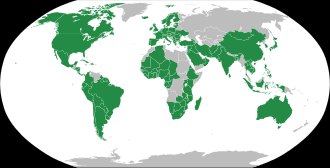
The Minamata Convention sought to reduce mercury pollution through controls spanning supply, products, industrial processes and releases.
Background
A poison with a long legacy
The treaty's name recalls mercury poisoning in Minamata, Japan. Mercury can circulate through the environment and enter food chains; controlling one factory or one product alone cannot address all sources of exposure.[2]
What happened
- 2013–2017
A global agreement
Negotiations concluded in 2013, with formal adoption in Kumamoto that October. The convention entered into force in August 2017, creating obligations across several stages of mercury production, use and disposal.[2]
Impact & evidence
Different sources require different measures
Controls cover matters including mercury supply, selected products and processes, emissions and releases. Artisanal and small-scale gold mining presents particular difficulties because livelihoods, informal economies and hazardous exposure are intertwined.[2]
Aftermath & legacy
Prevention and accountability
The convention provides a shared framework for reducing future harm. It does not erase existing contamination or automatically compensate people already affected. Effective implementation requires monitoring, practical alternatives and resources as well as legal commitments.[1]
Sources & image credits (2)
M.Bitton Image source ↗