Mau Mau Rebellion
An armed struggle over land and freedom, met by British military repression and mass detention.
- When
- 1952–1960; independence in 1963
- Where
- Kenya under British colonial rule
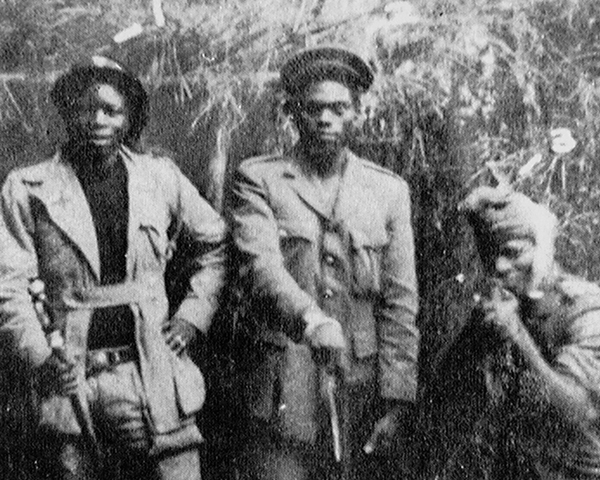
The Mau Mau uprising challenged colonial control of land and political power. Forest warfare, coercive resettlement and detention transformed civilian life, while the conflict also divided Kenyan communities. Military defeat did not end the struggle for independence or survivors’ demands for justice.
Background
Land, labour and political exclusion
Colonial settlement transferred productive land to European ownership and drew dispossessed Africans into poorly paid labour. Demands for land and effective political representation intensified. The Kenya Land and Freedom Army drew chiefly on Kikuyu, Embu and Meru communities, with other supporters; Mau Mau was never synonymous with every Kenyan or every opponent of British rule.[2]
What happened
- October 1952
Emergency powers and arrests
On 21 October, the colonial secretary told Parliament that an Emergency had been proclaimed the previous night. Troops were reinforced and leaders of the Kenya African Union, including Jomo Kenyatta, were arrested. The government’s accusations against political leaders did not make the nationalist movement and the forest armies a single organisation.[3]
- 1953–1955
Forest war and control of civilian life
British and African troops fought guerrillas around Mount Kenya and the Aberdares. A Kikuyu Home Guard supported the colonial forces. Operation Anvil brought mass arrests in Nairobi in April 1954; forced concentration into guarded villages sought to cut forest fighters off from food and support.[1]
- 1956
Kimathi captured, resistance weakened
Dedan Kimathi’s capture on 21 October 1956 marked a decisive defeat for the forest leadership. Some fighters continued resisting after the main military campaign. The uprising’s armed networks, civilian supporters and competing leaders had never formed a wholly unified movement.[2]
Impact & evidence
Deaths and the limits of official accounting
The National Army Museum records over 10,000 Mau Mau deaths, around 600 security-force deaths and nearly 2,000 civilian deaths, overwhelmingly African. It also notes that unofficial estimates of those killed in counterinsurgency are substantially higher. These categories do not establish an exhaustive count of deaths throughout detention and forced resettlement.[1]
Detention extended beyond proven fighters
Britain’s 2013 parliamentary statement acknowledged detention without trial, extensive use of capital punishment and harsh rehabilitation regimes. Many detainees were never tried, and their links to Mau Mau were not established. The detention-system companion profile examines those institutions and the survivors’ later legal claims in more detail.[4]
Aftermath & legacy
Independence after military defeat
The main rebellion was defeated before the Emergency ended in 1960. Its repression nevertheless strengthened the wider independence campaign. Kenya became independent in 1963; the route to sovereignty also involved political organising and constitutional negotiations.[1]
Survivors’ claims decades later
In 2013 Britain acknowledged torture and ill-treatment by the colonial administration and agreed a £19.9 million settlement, including legal costs, covering 5,228 claimants. It continued to deny legal liability. The settlement recognised particular survivors’ suffering rather than compensating everyone affected by the conflict.[4]