Women of Liberia Mass Action for Peace
Bringing Christian and Muslim women together to press for an end to war.
- When
- 2002–2003
- Where
- Liberia; peace talks in Ghana
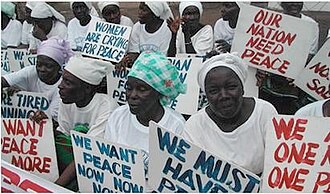
The Liberian women's peace movement used nonviolent mobilisation to demand an end to civil war. Leymah Gbowee helped organise women across religious divisions, making their participation visible in a political process long dominated by armed actors.
Background
War in everyday life
Years of conflict devastated communities and exposed women to severe insecurity. Organisers built collective action from these shared experiences.[1]
What happened
Impact & evidence
Organising across a divided society
Christian and Muslim women organised together despite divisions that might otherwise have kept them apart. Their public mobilisation made the demand for an end to war difficult to ignore and pressed armed leaders to pursue a settlement. Gbowee’s account places ordinary women’s organising at the centre of the story. Their contribution depended on sustained collective work, extending beyond the best-known individual leader.[1]
Aftermath & legacy
Women in peacebuilding
The movement helped establish women's role as political participants in peace processes. Its contribution formed part of a broader settlement involving many Liberian and international actors.[1]
Sources & image credits (2)
Author not established in the image record; via Wikimedia Commons. Image source ↗