Laki eruption in Iceland
The Laki eruption released vast quantities of lava and gases, contributing to a severe subsistence crisis in Iceland.
- When
- 1783–1784
- Where
- Iceland, with wider atmospheric effects
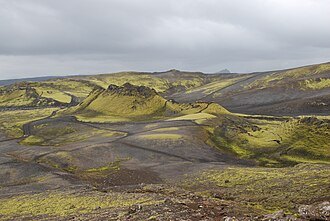
The Laki eruption released vast quantities of lava and gases, contributing to a severe subsistence crisis in Iceland.
Background
A prolonged volcanic episode
Laki was a fissure eruption rather than one brief explosion. Its gases and fallout affected the environment beyond the lava-covered ground, making food production and livestock survival central to the disaster.[2]
What happened
- 1783–1784
Lava, haze and agricultural losses
Eruptions continued over months. Toxic fallout and environmental stress harmed livestock and food supplies. Atmospheric effects were observed far beyond Iceland, though not every contemporary hardship can be attributed to the eruption with equal confidence.[2]
Impact & evidence
A population fall of about one fifth
Morison and colleagues’ 2024 review gives 49,753 inhabitants in 1783 and 39,190 in 1786, drawing on Hannes Finnsson’s account. It associates the collapse with famine, malnutrition and disease. These figures describe population change across three years, not a direct count of people killed by lava or a complete excess-death register.[2]
Aftermath & legacy
Relief delayed
The review describes months of delay between Iceland and Denmark; storms prevented aid landing until April 1784. Danish caution over expenditure, slow instructions and inadequate emergency arrangements worsened hardship. The disaster combined volcanic exposure with dependence on vulnerable food supplies and distant decision-making.[2]
Sources & image credits (2)
Chmee2 / Valtameri Image source ↗