Kyoto Protocol
The Kyoto Protocol set binding emissions targets for participating industrialised countries.
- When
- 1997–2020 commitment framework
- Where
- Kyoto, Japan, and participating states
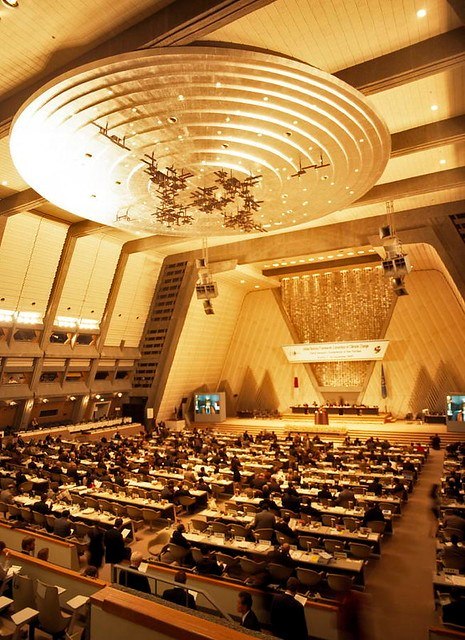
The Kyoto Protocol set binding emissions targets for participating industrialised countries.
Background
Turning a framework into quantified obligations
The 1992 climate convention established broad responsibilities. Kyoto sought more specific commitments for industrialised countries, reflecting their historical contribution to greenhouse-gas accumulation and greater capacity to act.[2]
What happened
- 11 December 1997
The protocol was adopted
Negotiators agreed emissions targets and mechanisms for implementation. The protocol entered into force in 2005; adoption and legal operation therefore occurred years apart. Its first commitment period ran from 2008 to 2012.[2]
Impact & evidence
Different routes to compliance
The framework included emissions trading and project-based mechanisms alongside domestic measures. Accounting, verification and the distribution of obligations became central practical questions, not merely technical details after a political agreement.[2]
Targets and differentiated responsibility
The first commitment period sought an average reduction of about 5% below 1990 emissions for participating industrialised countries. Countries had different assigned targets. Developing countries did not receive the same binding numerical obligations, making the distribution of historical responsibility central to both the protocol’s design and the arguments around it.[2]
Aftermath & legacy
A second period and an incomplete reach
The Doha Amendment provided a second commitment period for 2013–2020. Limited participation constrained the protocol's global reach. The later Paris Agreement adopted a different structure under the same convention, rather than simply extending Kyoto's original target system to every country.[2]
Sources & image credits (2)
United Nations Photo · Copyright retained by the rights holder Image source ↗