Joseon Korea's seowon academies
Seowon linked scholarship, commemoration and local intellectual authority within carefully designed landscapes.
- When
- Sixteenth–nineteenth centuries
- Where
- Joseon Korea
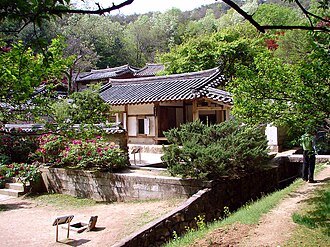
Seowon linked scholarship, commemoration and local intellectual authority within carefully designed landscapes.
Background
Learning outside the central state school system
Seowon developed as local academies associated with Neo-Confucian scholars. They combined teaching with reverence for exemplary thinkers. Their location and organisation reflected relationships among moral cultivation, scholarship and the surrounding landscape.[1]
What happened
- Sixteenth–seventeenth centuries
A network of academies grows
Scholars and local elites established institutions across Joseon Korea. Lecture spaces, places for study and shrines served distinct but connected functions. The academies transmitted ideas while strengthening regional scholarly communities.[2]
Impact & evidence
Not institutions open equally to everyone
Seowon supported learning but were also embedded in elite status and political networks. Their influence could bring conflict with central authority. Appreciating their intellectual contribution does not require treating them as universally accessible schools or as detached from factional politics.[1]
Aftermath & legacy
A surviving architectural record
Nine academies were inscribed together on UNESCO's World Heritage List in 2019. Their buildings and settings preserve a distinctive educational tradition. The heritage designation identifies representative survivors, not the entire historical network or a claim that every academy had an identical experience.[3]
Sources & image credits (3)
- Wikipedia — Seowon ↗
- UNESCO: Seowon, Korean Neo-Confucian Academies ↗
- UNESCO: academy nomination documents ↗
Steve46814 Image source ↗