Greenham Common women's peace camp
A sustained women-led protest against the deployment of nuclear cruise missiles.
- When
- 1981–2000
- Where
- Greenham Common, Berkshire, United Kingdom
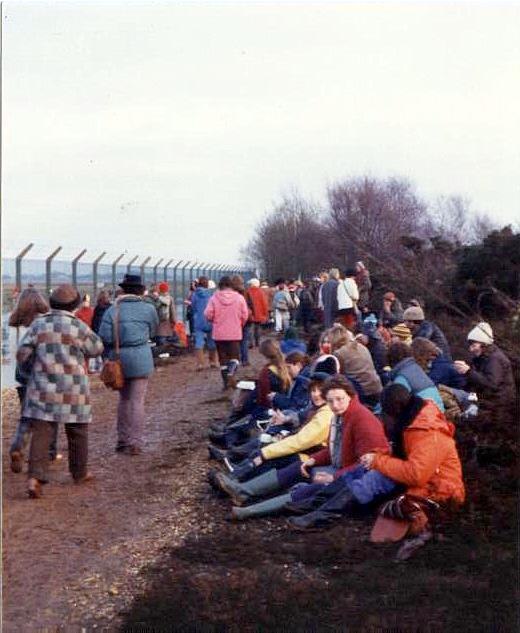
A sustained women-led protest against the deployment of nuclear cruise missiles.
Background
A march became an encampment
Women for Life on Earth marched from Wales to Greenham Common in 1981. Some participants stayed at the base, turning a demonstration against US cruise missiles into a long-running peace camp.[1]
What happened
- 1982–1983
Creative mass action
Women organised blockades, fence-cutting and large gatherings, including the encircling of the base. Everyday camp life became part of the protest, with repeated evictions and arrests rather than one decisive confrontation.[1]
- 12 December 1982
Embrace the Base
On 12 December 1982, about 30,000 women linked hands around the base. The action made opposition to nuclear deployment visible through a large, peaceful encirclement. Smaller groups continued daily protest through difficult living conditions, demonstrating how a mass mobilisation and a permanent camp could reinforce each other.[1]
Impact & evidence
Women changed the form of protest
The camp connected nuclear disarmament to feminism and challenged assumptions about who could speak on defence policy. Participants differed in tactics and beliefs; the movement was not a single uniform organisation.[1]
Protest in the government’s own records
A Ministry of Defence report preserved by the National Archives describes preparations for the demonstration of 25 June 1983, including reinforcement by MOD police and RAF personnel. The document records the institutional response to the camp’s sustained pressure, alongside the women’s own accounts of non-violent resistance.[2]
Aftermath & legacy
After the missiles
Missile withdrawal followed arms-control agreements as well as years of public opposition. Protest continued over land and military use after the weapons left. Greenham’s legacy includes networks, methods and public images that outlasted its immediate campaign.[1]
Sources & image credits (2)
- Wikipedia — Greenham Common Women's Peace Camp ↗
- The National Archives: MOD report on the Greenham demonstration, 27 June 1983 ↗
ceridwen · CC BY-SA 2.0 Image source ↗