Founding and intellectual life of ancient Nalanda
A major Buddhist institution connected scholarship, teaching and international intellectual exchange.
- When
- Fifth–thirteenth centuries CE
- Where
- Nalanda, Bihar, India
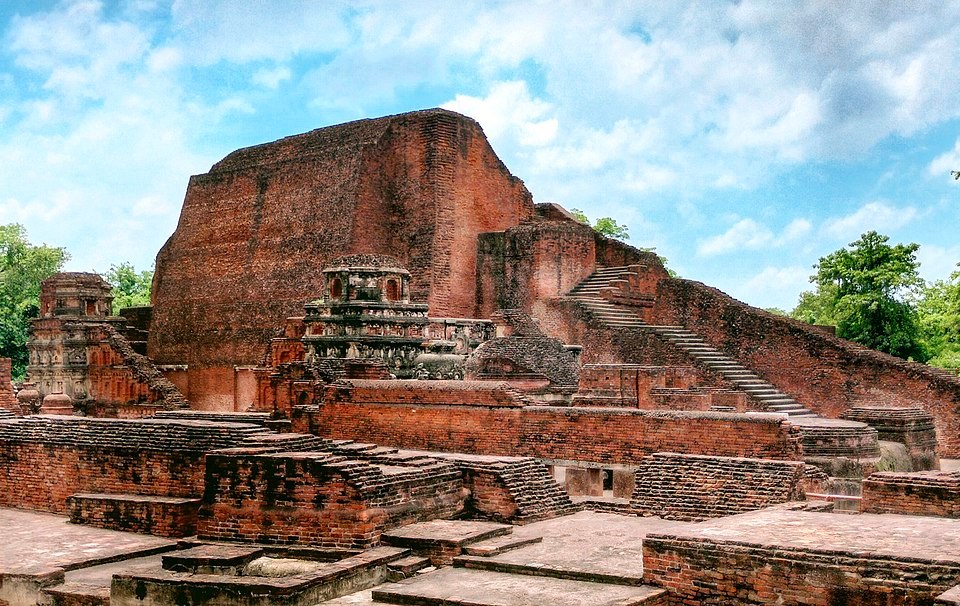
A major Buddhist institution connected scholarship, teaching and international intellectual exchange.
Background
A long-lived scholastic community
Nalanda developed as a monastic and educational centre supported over centuries. Its Buddhist identity did not confine its significance to devotional practice: teaching, debate and the transmission of learning were central to the institution.[2]
What happened
- Centuries of activity
Buildings and networks grew together
Successive construction produced monasteries, shrines and other structures whose remains survive in Bihar. Nalanda attracted scholars and students from beyond its immediate region, helping connect South Asia with wider Asian Buddhist traditions.[2]
Impact & evidence
An institution visible in archaeology
Excavated buildings and objects provide material evidence alongside written accounts. They show accumulated development rather than one campus built in a single founding act. The remains span periods both earlier and later than Nalanda’s principal centuries as a scholastic centre.[2]
Aftermath & legacy
Decline, memory and preservation
The institution declined and was abandoned by the thirteenth century. Its remains now form a World Heritage site. Nalanda's history challenges accounts that begin organised advanced learning only with medieval European universities, while differences in institutional form still deserve recognition.[2]
Sources & image credits (2)
Odantapuribs · CC BY-SA 4.0 Image source ↗