Eldgjá eruption in Iceland
Eldgjá produced an enormous lava eruption whose timing and distant effects have been reconstructed from ice cores and historical evidence.
- When
- 939–940 CE
- Where
- Iceland, with wider atmospheric effects
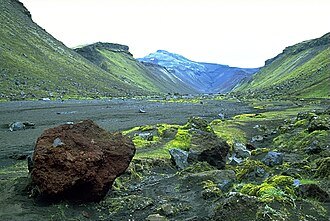
Eldgjá produced an enormous lava eruption whose timing and distant effects have been reconstructed from ice cores and historical evidence.
Background
Evidence across disciplines
Unlike recent disasters, Eldgjá lacks a detailed contemporary statistical record. Researchers combine volcanic deposits, Greenland ice cores, tree-ring evidence and written accounts to reconstruct the event and its wider effects.[2]
What happened
- 939–940
A revised chronology
The study dates the eruption's beginning to spring 939 and continuing activity to at least autumn 940. This chronology improves on older broad dating and allows comparison with records of unusual weather elsewhere.[2]
Impact & evidence
No defensible precise death toll
The eruption had major environmental effects, but a reliable numerical human death toll is not established. Possible hardship and atmospheric consequences should not be converted into invented mortality statistics.[2]
Aftermath & legacy
Literature and religious change
The researchers discuss whether memories of the eruption influenced the poem Völuspá and Iceland's later conversion to Christianity. This is an interpretation of cultural influence, not proof that a volcanic event single-handedly caused religious change.[2]
Sources & image credits (2)
Andreas Tille Image source ↗