Costa Rica's forest recovery and environmental payments
Paying landholders for forest benefits as part of a wider reversal of deforestation.
- When
- From 1997
- Where
- Costa Rica
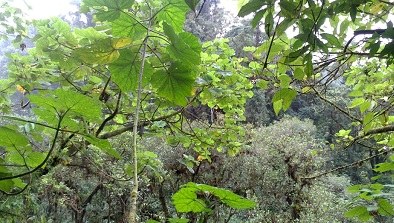
Paying landholders for forest benefits as part of a wider reversal of deforestation. Forest clearance for farming and cattle reduced Costa Rica's tree cover during the twentieth century. Protected areas helped conserve land, but much forest remained privately held.
Background
Forests under agricultural pressure
Forest clearance for farming and cattle reduced Costa Rica's tree cover during the twentieth century. Protected areas helped conserve land, but much forest remained privately held. A policy addressing those properties needed to change the financial incentives surrounding the decision to clear or retain trees.[1]
What happened
- 1996–1997
A new legal and financial framework
Forestry Law 7575 recognised environmental services, and the payment programme began in 1997 through FONAFIFO. Forest owners could receive compensation for services including carbon storage, water protection, biodiversity and scenic value. Fuel-tax revenue became an important source of funding.[1]
- Following years
Conservation through contracts
Payments supported forest protection and other eligible forestry activities. Contracts, monitoring and rules for entry made the programme more than a general subsidy. However, administrative costs and landholding requirements could affect which owners were able to participate.[1]
Impact & evidence
One policy among several
Costa Rica's recovering forest cover cannot be attributed to payments alone. Protected areas, restrictions on land conversion and economic changes also mattered. Evaluation asks whether payments protected forest that would otherwise have been cleared, as well as how benefits were distributed.[1]
Aftermath & legacy
An influential experiment
The programme became a reference for environmental payment schemes internationally. Its lesson is not that every ecological value can be reduced to a price. It shows how public finance can reward conservation, while exposing difficult questions about additional protection, stable funding and inclusion of smaller landholders.[1]
Sources & image credits (2)
Phil899 · CC BY-SA 4.0 (source record). Resized for display. Image source ↗