Bandung Conference
Asian and African states asserting a shared voice against colonialism and domination.
- When
- 18–24 April 1955
- Where
- Bandung, Indonesia
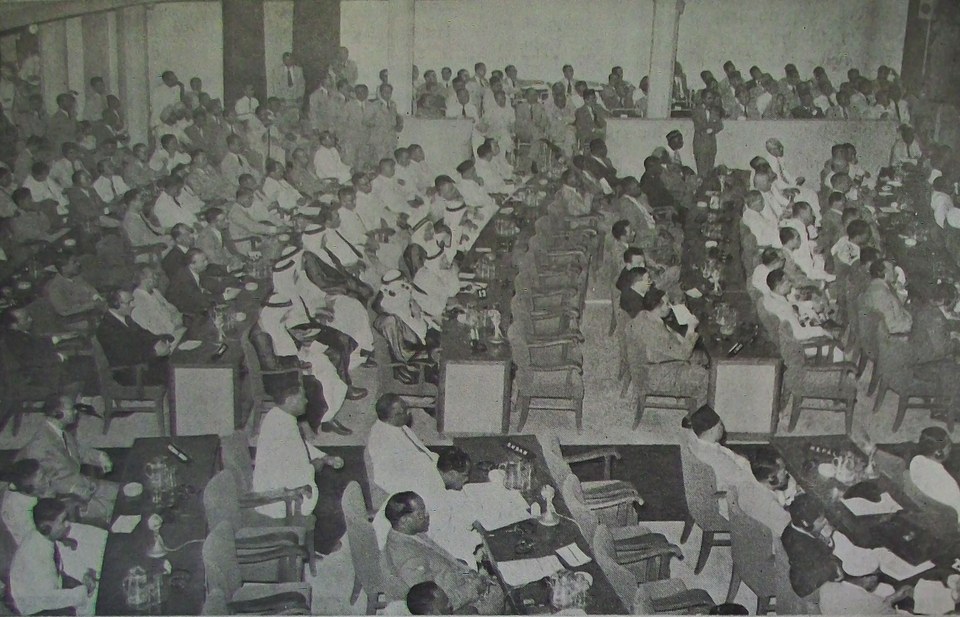
Asian and African states asserting a shared voice against colonialism and domination. Decolonisation was producing new governments while the Cold War pressured countries to align with rival blocs. Indonesia, India, Burma, Ceylon and Pakistan organised a conference that brought together twenty-nine Asian and African states.
Background
New states in a divided world
Decolonisation was producing new governments while the Cold War pressured countries to align with rival blocs. Indonesia, India, Burma, Ceylon and Pakistan organised a conference that brought together twenty-nine Asian and African states. Their political systems and foreign-policy positions differed, but they shared concerns about sovereignty and unequal international power.[1]
What happened
- April 1955
A forum outside the imperial capitals
Delegates discussed economic and cultural cooperation, colonial rule and peaceful coexistence. The meeting provided space for countries often treated as objects of great-power policy to speak as participants. Disagreement over communism and alliances showed that Afro-Asian solidarity did not mean complete political uniformity.[1]
- 24 April 1955
Principles and commitments
The final communiqué set out principles including respect for sovereignty, non-interference and peaceful settlement of disputes. Participants opposed colonialism and racial discrimination. These commitments supplied a diplomatic language that could be used against domination, even though governments would not always honour them consistently.[1]
Impact & evidence
A political platform rather than a world government
Bandung did not create a binding alliance or end colonial rule by itself. Its importance lay in collective visibility, relationships and a challenge to assumptions that only established powers should define international affairs. It helped prepare the ground for later cooperation among non-aligned countries.[2]
Aftermath & legacy
Solidarity with internal differences
The conference became an enduring symbol of Afro-Asian political agency. Its legacy should include both that achievement and the tensions between stated principles and subsequent state behaviour. The history is stronger when Bandung is understood as a negotiated coalition, not a single movement with identical interests.[1]
Sources & image credits (2)
Foreign Ministry of the Republic of Indonesia · Public domain (source record). Resized for display. Image source ↗