Contents
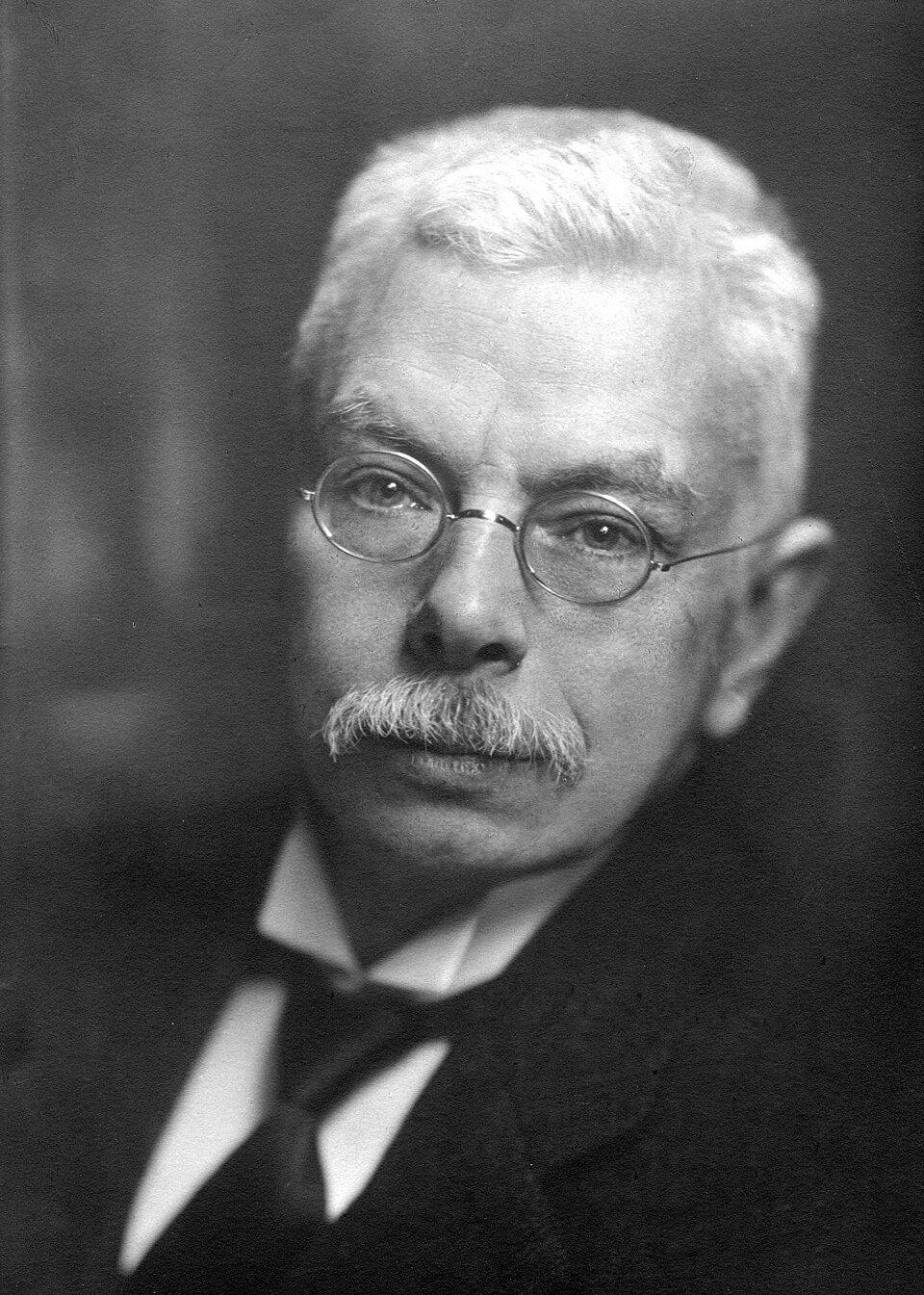
Pieter Zeeman
Discovering how magnetic fields split the spectral lines of light.
Kerr-effect doctorate · Zeeman effect
- Born
- 25 May 1865
- Birthplace
- Zonnemaire, Netherlands
- Died
- 9 October 1943
More people
Pieter Zeeman
Pieter Zeeman was a Dutch experimental physicist who shared the 1902 Nobel Prize in Physics with Hendrik Lorentz. The effect named after him became a tool for studying atoms and magnetic fields.
Early life
Early observation
As a schoolboy, sent a description of an aurora to the journal Nature.
Leiden studies
Trained in physics and completed his doctorate in 1893.
Career
- 1890s
Leiden research
Investigated light and magnetism.
- 1896–1900
Amsterdam appointment
Moved to the University of Amsterdam and became a professor.
- 1920s–1935
Laboratory leadership
Continued precision optical research before retiring in 1935.
Selected work
Kerr-effect doctorate
Studied light reflected from magnetised surfaces.
Zeeman effect
Observed spectral-line splitting in a magnetic field.
Nobel Prize in Physics
Shared the award with Lorentz, who supplied the theoretical explanation.
Beyond work
Family
Married Johanna Elisabeth Lebret; they had four children.
Scientific service
Played a leading role in the Royal Netherlands Academy of Arts and Sciences.
Sources & photo credit
Life, career and references ↗Institutional source ↗Photo: Unknown author Unknown author. Public domain · Original image. Cropped and displayed in monochrome.
