Contents
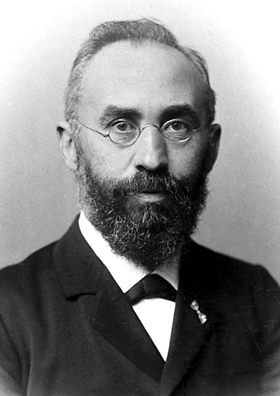
Hendrik Lorentz
Developing electron theory and mathematical foundations used in special relativity.
Electron theory · Nobel Prize in Physics
- Born
- 18 July 1853
- Birthplace
- Arnhem, Netherlands
- Died
- 4 February 1928
More people
Hendrik Lorentz
Hendrik Lorentz was a Dutch physicist whose work connected electricity, magnetism and light. He shared the 1902 physics Nobel with Pieter Zeeman.
Early life
Arnhem schooling
Excelled in science, mathematics and languages.
Leiden studies
Studied physics and completed a doctorate on light in 1875.
Career
- 1878
Leiden professorship
Took the university’s new chair of theoretical physics.
- 1890s–1900s
Electron theory
Developed explanations of electromagnetic phenomena and motion.
- 1912–1928
Haarlem and international science
Worked at Teylers Museum while remaining involved in research and scientific cooperation.
Contributions
Electron theory
Modelled interactions between charged particles and electromagnetic fields.
Nobel Prize in Physics
Shared recognition for research into magnetism’s effects on light.
Lorentz transformations
Developed relationships later central to special relativity.
Beyond work
Water engineering
Led a committee studying how reclamation of the Zuiderzee would alter water movement.
Scientific family
His daughter Geertruida also became a physicist.
Sources & photo credit
Life, career and references ↗Institutional source ↗Photo: Unknown authorUnknown author. Public domain · Original image. Cropped and displayed in monochrome.
.jpg)