Contents
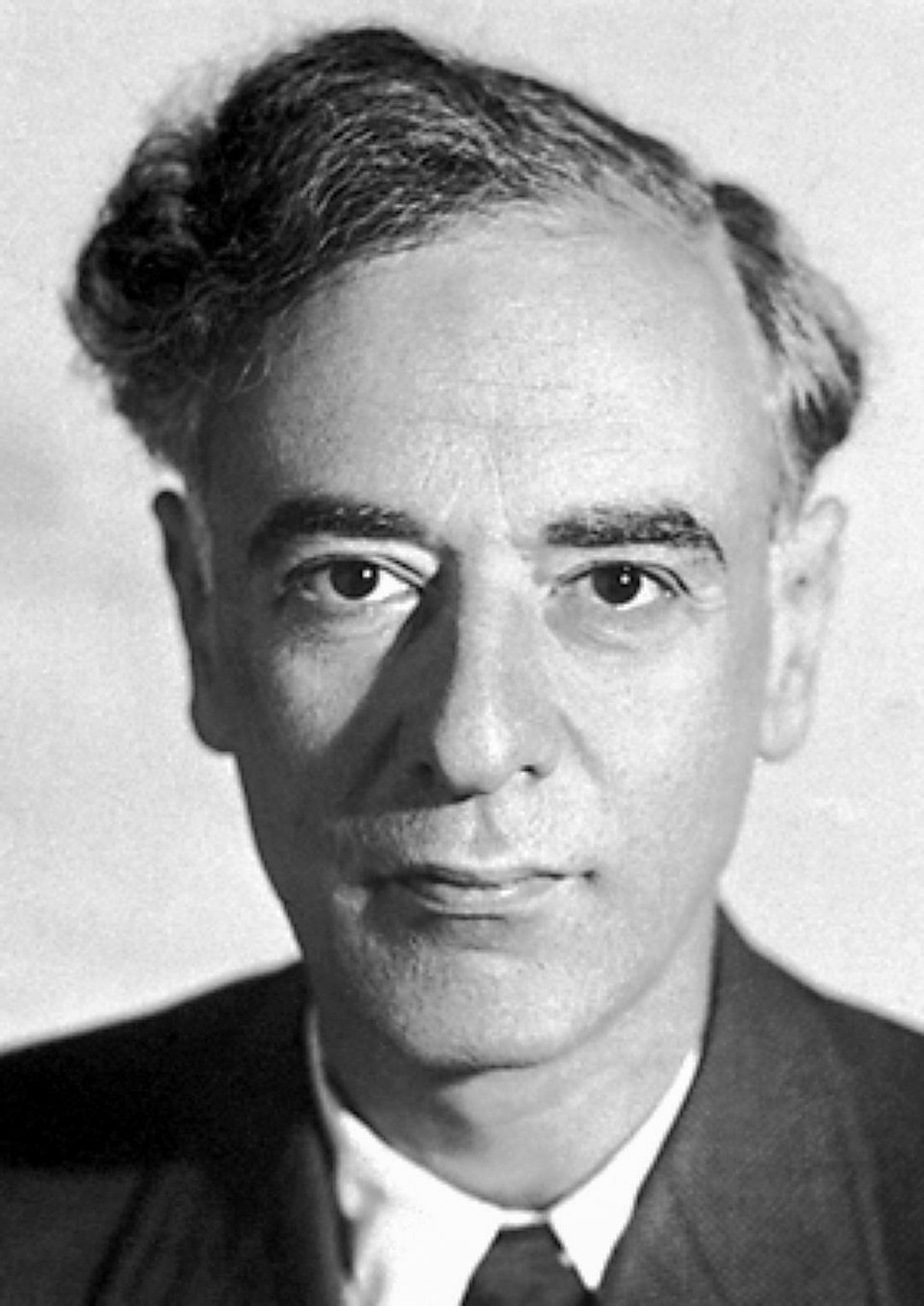
Lev Landau
Explaining superfluid helium and building influential theories of matter.
Phase transitions · Superfluidity
- Born
- 9 January 1908
- Birthplace
- Baku, Russian Empire
- Died
- 1 April 1968
More people
Lev Landau
Lev Landau was a Soviet theoretical physicist whose ideas shaped the study of liquids, phase transitions and superconductivity. He also co-wrote a major physics textbook series with Evgeny Lifshitz.
Early life
Scientific household
His father was an engineer and his mother a physician.
Early graduation
Completed physics studies at Leningrad University at 19.
Career
- 1929–1931
Research abroad
Worked in several European centres, particularly with Niels Bohr in Copenhagen.
- 1932
Kharkov
Led the theoretical department at the Ukrainian Physico-Technical Institute.
- 1937
Moscow
Moved to the Institute for Physical Problems.
- 1962
Nobel Prize
Received the physics prize for theories of condensed matter, especially liquid helium.
Contributions
Phase transitions
Developed a general approach to changes in the state and order of matter.
Superfluidity
Explained the unusual frictionless flow of very cold helium.
Ginzburg–Landau theory
Co-developed a theory describing superconductivity.
Beyond physics
Imprisonment
Was detained in 1938 after involvement with an anti-Stalin leaflet and released in 1939 following interventions by colleagues.
Family
Married Kora Drobanzeva; their son Igor also became a physicist.
Sources & photo credit
Life, career and references ↗Nobel biography ↗Photo: Nobel foundation. Public domain · Original image. Cropped and displayed in monochrome.
