Contents
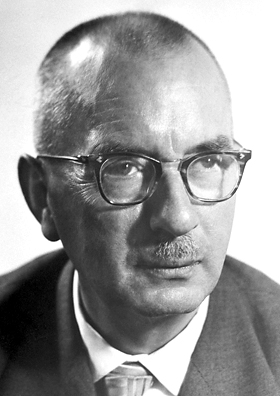
Karl Ziegler
Discovering catalysts that made high-density polyethylene possible at low pressure.
Large-ring synthesis · Polyethylene catalysts
- Born
- 26 November 1898
- Birthplace
- Helsa, Germany
- Died
- 12 August 1973
More people
Karl Ziegler
Karl Ziegler was a German chemist whose organometallic research transformed polymer production. He shared the 1963 Nobel Prize in Chemistry with Giulio Natta.
Early life
University training
Completed his doctorate at Marburg in 1920.
Early research
Studied reactive carbon compounds before moving into organometallic chemistry.
Career
- 1920s
Heidelberg
Spent a decade teaching and researching there.
- 1936
Halle
Became professor and director of the chemistry institute.
- 1943
Mülheim
Began leading the institute later known as the Max Planck Institute for Coal Research.
Contributions
Large-ring synthesis
Developed methods for making large cyclic molecules.
Polyethylene catalysts
Discovered combinations of metal compounds that enabled low-pressure polymerisation.
Nobel Prize in Chemistry
Shared recognition for work on high polymers.
Beyond the lab
Family
Married Maria Kurtz in 1922; their children pursued medicine and physics.
Art collection
He and Maria collected paintings, later supporting a foundation in Mülheim.
Sources & photo credit
Life, career and references ↗Nobel biography ↗Photo: Unknown author Unknown author. Public domain · Original image. Cropped and displayed in monochrome.
