International Space Station assembly
Modules launched by different partners were joined in orbit to build a continuously inhabited research station.
- When
- 1998 onward
- Where
- Low Earth orbit
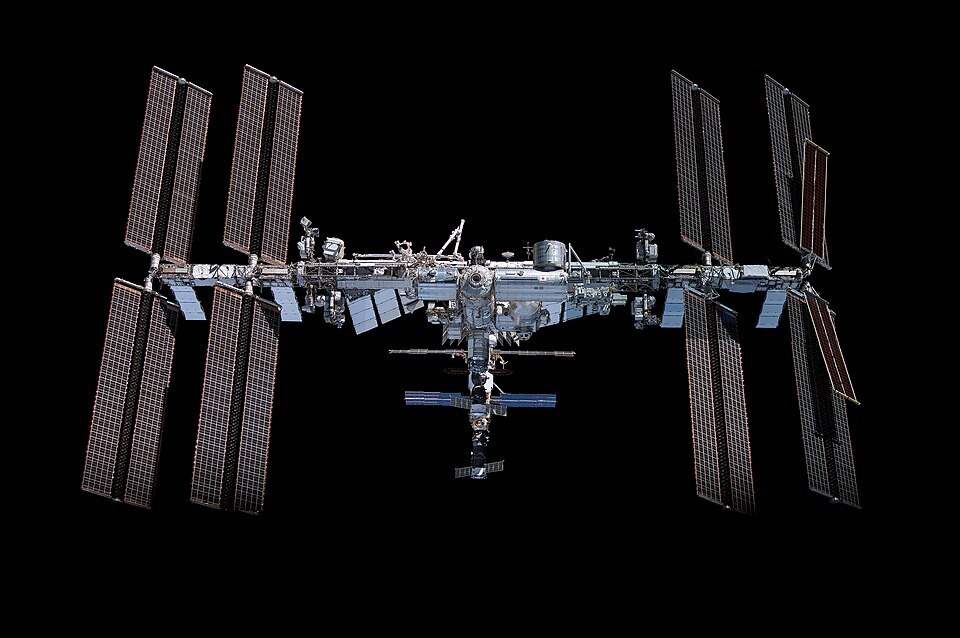
Modules launched by different partners were joined in orbit to build a continuously inhabited research station.
Background
A station too large for one launch
The International Space Station combined national programmes into a modular project. Its laboratories, living areas, power systems and external structure had to be launched separately and connected in space. Engineering compatibility and political cooperation were therefore inseparable from the physical construction.[1]
What happened
- November–December 1998
Zarya and Unity joined
Zarya launched on 20 November. In December, Endeavour carried Unity into orbit and astronauts began connecting the two elements. This established the first assembly of the station, not a fully equipped laboratory or the start of permanent habitation.[2]
- 2000 onward
Habitation and expansion
The first long-duration crew arrived in 2000. Subsequent missions added laboratories, solar arrays, truss sections and other systems. Spacewalks, robotic operations and resupply flights made construction possible while maintaining a working orbital outpost.[3]
Impact & evidence
Partnership was built into the hardware
Different contributions supplied functions such as power, propulsion, research facilities and life support. The station's operation depended on those systems working together, making cooperation more than a symbolic agreement between flags.[1]
Aftermath & legacy
Research and maintenance over time
The ISS became a platform for microgravity research and long-duration human spaceflight. Its history also includes high costs, operational risks and the need to maintain ageing equipment. The assembly achievement should be distinguished from claims that every experiment or proposed benefit has been equally successful.[3]