China's Grand Canal
A waterway network connecting regions and supplying successive Chinese capitals.
- When
- Ancient origins; major Sui-era integration
- Where
- Eastern China
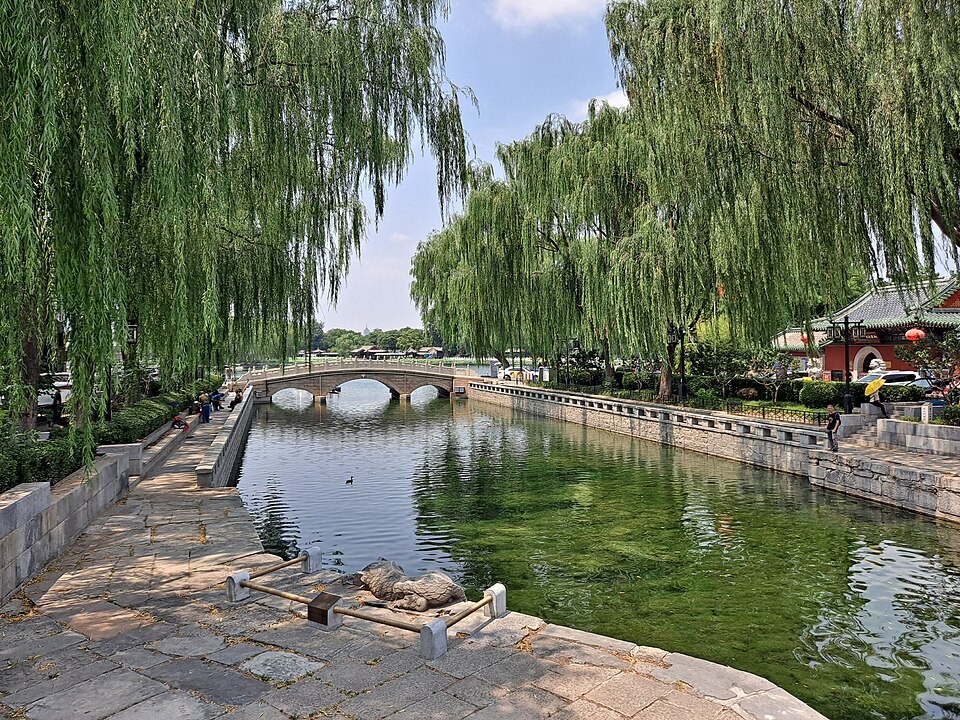
A waterway network connecting regions and supplying successive Chinese capitals. China's major rivers run largely eastward, while political centres and agricultural supplies were separated north to south. Earlier canals provided local connections.
Background
Rivers did not follow the needs of government
China's major rivers run largely eastward, while political centres and agricultural supplies were separated north to south. Earlier canals provided local connections. Building a larger network required linking river systems, managing water levels and mobilising enormous labour resources.[1]
What happened
- Sui dynasty, 7th century
Existing waterways connected
Sui rulers expanded and joined canals into a major transport system. The work supported movement of grain, officials and troops, while placing heavy demands on workers and communities. The canal's strategic value should be considered alongside the coercion and expense involved in construction.[1]
- Later dynasties
Routes adapted and maintained
Successive governments altered sections and developed systems for locks, embankments and dredging. The canal was therefore not a single unchanged engineering project. Maintaining navigation required continuing responses to sediment, floods and shifts in political geography.[1]
Impact & evidence
Movement connected markets
Grain transport helped supply capitals and armies, while canal towns became centres of exchange. The network linked local production to wider state demands. Benefits were uneven: infrastructure could facilitate commerce and also make extraction of taxes and supplies more effective.[2]
Aftermath & legacy
A living network with many historical layers
The Grand Canal's significance rests in its long use and adaptation. Studying individual sections reveals how water management, labour and government interacted. Its survival does not mean every ancient section remains navigable, nor that a single ruler created the entire system.[1]
Sources & image credits (2)
EditQ · CC BY-SA 4.0 (source record). Resized for display. Image source ↗