First human spaceflight
Yuri Gagarin became the first person to travel into space and orbit Earth.
- When
- 12 April 1961
- Where
- Baikonur, Soviet Union, and Earth orbit
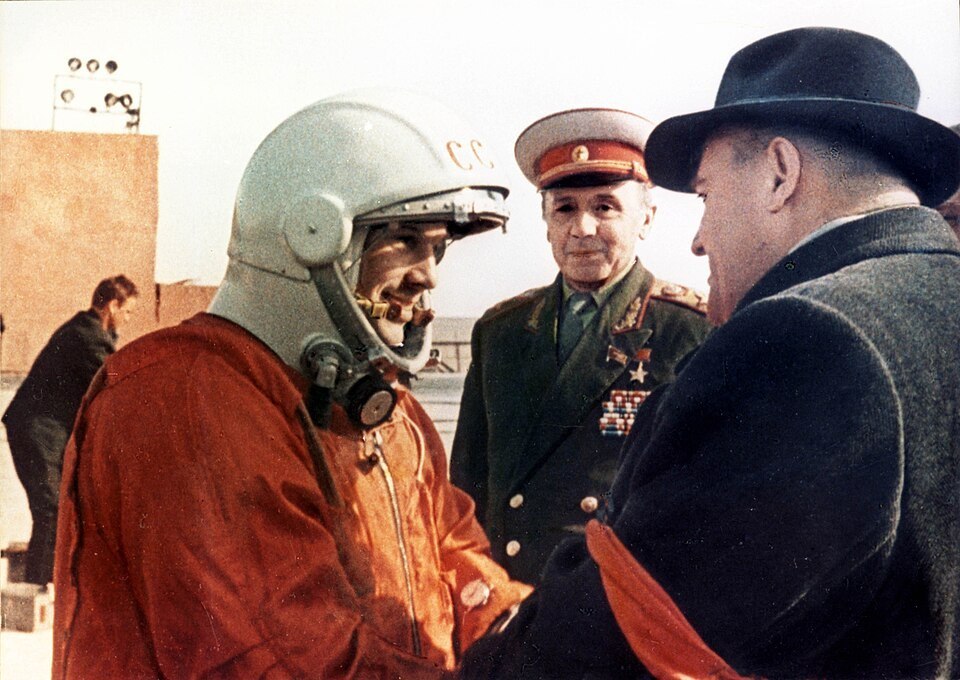
Yuri Gagarin became the first person to travel into space and orbit Earth.
Background
An orbital programme built through testing
Soviet engineers developed Vostok after satellite launches and flights carrying animals. The spacecraft needed to support a person through launch, weightlessness and re-entry. Gagarin was selected from a group of military pilots trained as cosmonauts.[1]
What happened
- 12 April 1961
One orbit in 108 minutes
Vostok 1 carried Gagarin around Earth in a flight lasting about 108 minutes. The journey demonstrated human survival through an orbital mission and made him an internationally recognised figure.[2]
Impact & evidence
Spacecraft and pilot landed separately
Gagarin ejected from the returning capsule and completed his descent by parachute. The distinction matters: the mission did not end with him seated inside a capsule making a modern-style crewed landing. Survival depended on several linked systems working in sequence.[3]
Aftermath & legacy
A human achievement within a political contest
The Soviet government used the flight as evidence of technological leadership. Gagarin's international visits also made it a symbol of human possibility. Later missions extended duration and capability, but none changed Vostok 1's place as the first human orbital flight.[1]
Sources & image credits (3)
Минобороны РФ / РИА Новости · CC BY 4.0 Image source ↗