Dujiangyan irrigation system
Diverting and distributing river water for irrigation while managing floods and sediment.
- When
- Traditionally founded around 256 BCE
- Where
- Sichuan, China
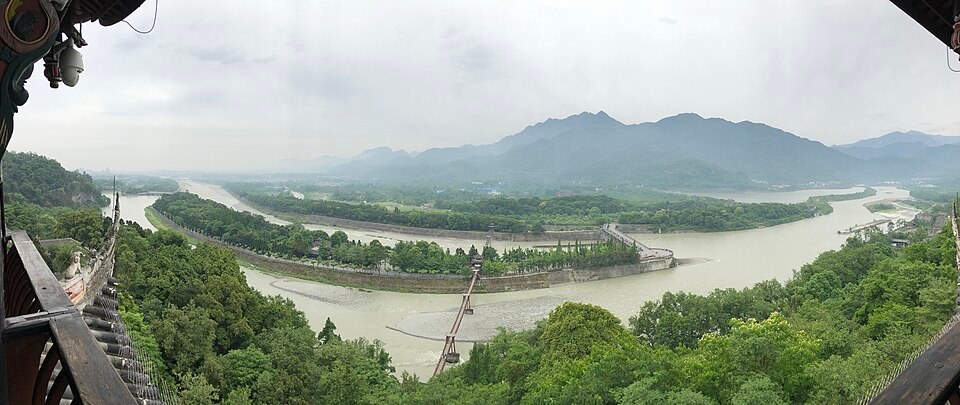
Diverting and distributing river water for irrigation while managing floods and sediment. The Min River descends from mountain terrain toward the Chengdu Plain. Seasonal flows brought both agricultural opportunity and flood risk.
Background
A river at the edge of a plain
The Min River descends from mountain terrain toward the Chengdu Plain. Seasonal flows brought both agricultural opportunity and flood risk. A useful water system had to distribute supplies without allowing sediment and destructive surges to overwhelm the channels.[1]
What happened
- Ancient Qin period
A system of diversion
The project traditionally associated with Li Bing divided the river and guided part of its flow into irrigation channels. Its principal features worked together to regulate water and sediment. This differs from a simple story of holding back the entire river behind one high dam.[1]
- Following centuries
Maintenance and adaptation
Channels and structures required repeated repair and adjustment. The system's longevity depended on institutions and local knowledge as well as the original design. Calling it ancient should not imply that every visible component has survived untouched from its first construction.[1]
Impact & evidence
Engineering fitted to river processes
The system supported irrigation and reduced some flood risks across an important agricultural region. Its value came from using the behaviour of water and sediment rather than attempting to eliminate those processes. Exact founding dates and attribution combine historical tradition with surviving evidence and should be expressed cautiously.[2]
Aftermath & legacy
Continuity through renewal
Dujiangyan remains a notable example of durable hydraulic infrastructure. Its history links engineering to sustained collective maintenance. The achievement is not only that a structure was once built, but that generations kept a complex water-management arrangement functioning under changing conditions.[1]
Sources & image credits (2)
星星 · CC BY-SA 4.0 (source record). Resized for display. Image source ↗