Contents
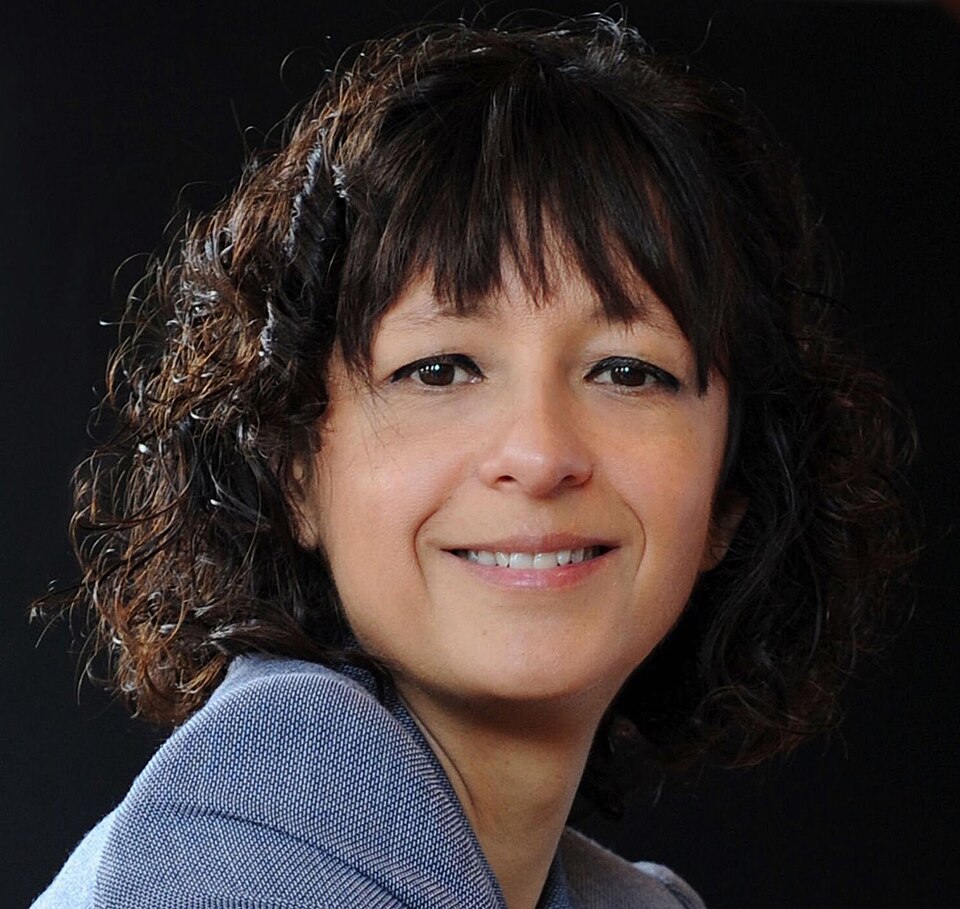
Emmanuelle Charpentier
Co-developing CRISPR-Cas9 as a programmable method for editing DNA.
CRISPR-Cas9 · Nobel Prize 2020
- Born
- 11 December 1968
- Birthplace
- Juvisy-sur-Orge, France
More people
Emmanuelle Charpentier
Emmanuelle Charpentier is a French microbiologist whose research on bacteria helped produce a widely used gene-editing tool. She shared the 2020 Nobel Prize in Chemistry with Jennifer Doudna.
Early life
Paris studies
Studied biochemistry, microbiology and genetics at Pierre and Marie Curie University.
Bacterial research
Completed doctoral work at the Institut Pasteur, investigating antibiotic resistance.
Career
- 1990s–2000s
International research
Worked in American laboratories before establishing research in Vienna.
- 2009
Swedish laboratory
Moved to Umeå University, continuing studies of bacterial regulation and defence.
- 2011–2012
CRISPR breakthrough
Identified a key RNA component and collaborated on programmable DNA cutting.
- 2015 onward
Berlin research
Joined the Max Planck Society and later founded its Unit for the Science of Pathogens.
Contributions
tracrRNA
Identified an RNA molecule essential to a bacterial CRISPR-Cas9 system.
Programmable Cas9
Co-developed a simplified system that could target selected DNA sequences.
Chemistry Nobel
Shared recognition for the genome-editing method.
Beyond the lab
International laboratory life
Built her career across France, the United States, Austria, Sweden and Germany.
Fundamental microbiology
Has emphasised that research into bacterial life can produce applications no one originally planned.
Sources & photo credit
Life, career and references ↗Nobel Prize biography and award ↗Photo: Bianca Fioretti, Hallbauer & Fioretti. CC BY-SA 4.0 · Original image. Cropped and displayed in monochrome.
