Contents
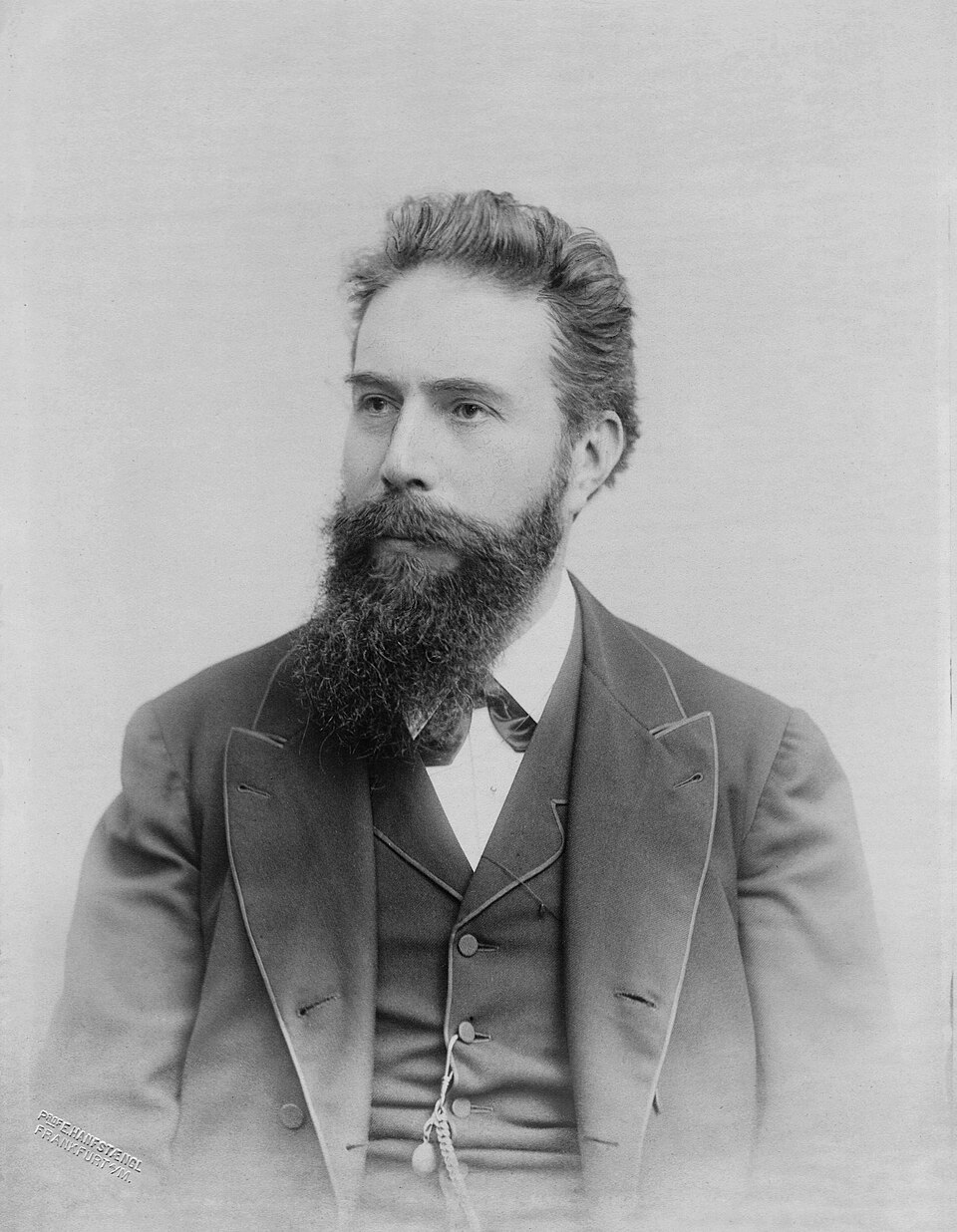
Wilhelm Röntgen
Discovering X-rays, making it possible to see inside the body without surgery.
X-rays · Hand radiograph
- Born
- 27 March 1845
- Birthplace
- Lennep, Germany
- Died
- 10 February 1923
More people
Wilhelm Röntgen
German experimental physicist whose unexpected laboratory observation became a new form of imaging. He received the first Nobel Prize in Physics in 1901.
Early life
Dutch childhood
Moved with his parents from Lennep to the Netherlands as a young child.
Zurich training
Studied mechanical engineering at the Swiss Federal Polytechnic and earned a doctorate in Zurich in 1869.
Career
- 1870s
Academic beginnings
Worked with August Kundt and held teaching posts in Strasbourg and Hohenheim.
- 1888
Würzburg
Took the physics chair where he later discovered X-rays.
- 1900
Munich
Moved to the University of Munich.
- 1901
First physics Nobel
Received the inaugural award for the discovery of X-rays.
Contributions
X-rays
Detected penetrating radiation while experimenting with electrical-discharge tubes.
Hand radiograph
Produced the famous image of his wife’s hand showing bones and a ring.
Research papers
Described the properties of the new radiation in three reports.
Beyond physics
Open discovery
Did not patent X-rays, allowing their applications to spread freely.
Family life
Married Anna Bertha Ludwig and adopted her niece Josephine.
Sources & photo credit
Life, career and references ↗Institutional biography and research ↗Photo: Erwin Hanfstaengl. Public domain · Original image. Cropped and displayed in monochrome.
,_88374_p.jpg)