Contents
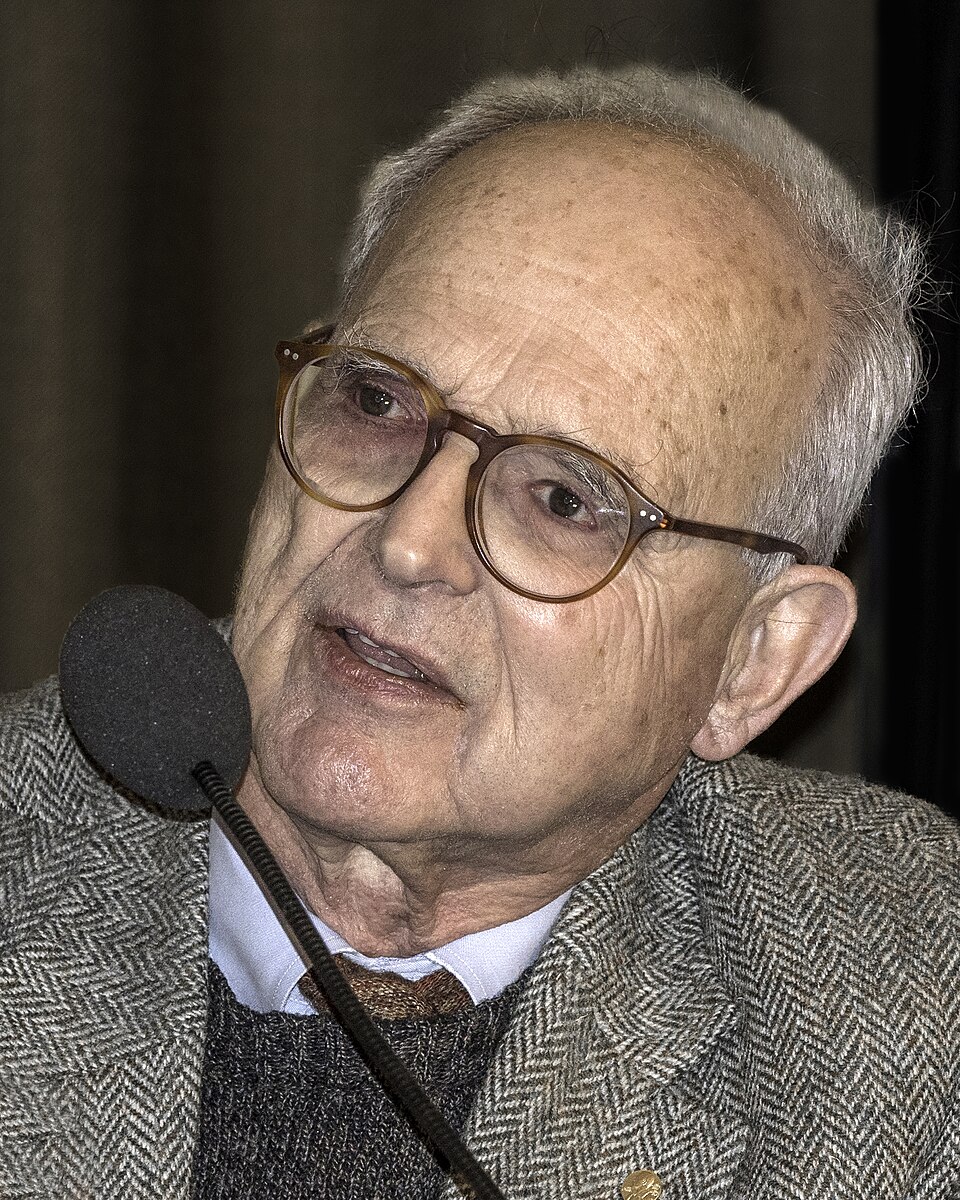
Rainer Weiss
Helping design LIGO, which detected gravitational waves from colliding black holes.
Laser interferometry · Cosmic background radiation
- Born
- 29 September 1932
- Birthplace
- Berlin, Germany
- Died
- 25 August 2025
More people
Rainer Weiss
Rainer Weiss was a German-American experimental physicist whose laser-based detector design helped make gravitational-wave astronomy possible. He shared the 2017 Nobel Prize in Physics with Barry Barish and Kip Thorne.
Early life
A refugee childhood
His family fled Nazi persecution, eventually settling in New York.
An interrupted degree
Returned to MIT after working as a laboratory technician, completing his doctorate in 1962.
Career
- 1964
MIT faculty
Established a research group studying cosmology and gravitation.
- 1972
Detector design
Developed a detailed laser-interferometer approach to detecting gravitational waves.
- 1984
Building a collaboration
Joined the MIT–Caltech effort that developed LIGO.
- 2017
Nobel recognition
Shared the Physics Prize after LIGO’s first detection.
Contributions
Laser interferometry
Worked out how light could measure extraordinarily small changes in distance.
Cosmic background radiation
Studied the Big Bang’s residual radiation and helped guide COBE.
LIGO detection
The collaboration recorded gravitational waves from a black-hole merger.
Beyond the lab
Classical music
A lifelong enthusiasm for music also encouraged his early interest in audio electronics.
Family
Married Rebecca Young in 1959; they had two children.
Sources & photo credit
Life, career and references ↗Nobel biography ↗Photo: Bengt Nyman from Vaxholm, Sweden. CC BY 2.0 · Original image. Cropped and displayed in monochrome.
.jpg)