Contents
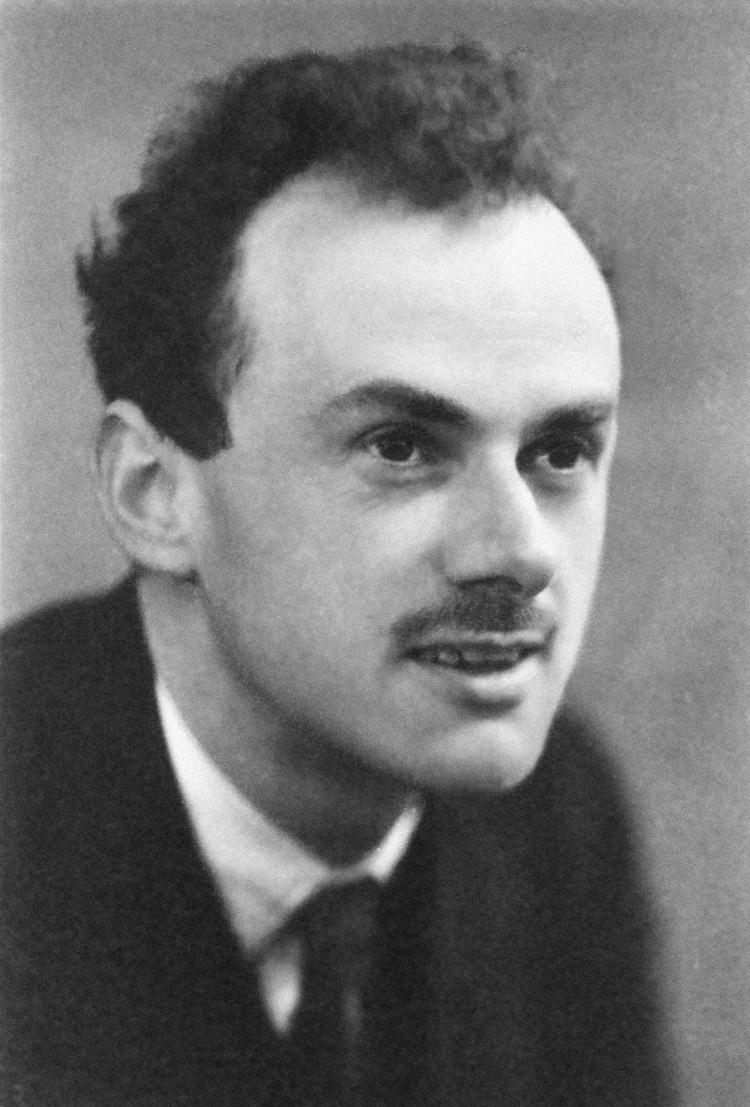
Paul Dirac
Developing a relativistic equation for the electron that pointed towards antimatter.
Dirac equation · The Principles of Quantum Mechanics
- Born
- 8 August 1902
- Birthplace
- Bristol, England, United Kingdom
- Died
- 20 October 1984
More people
Paul Dirac
Paul Dirac was a British theoretical physicist who shared the 1933 Nobel Prize with Erwin Schrödinger.
Early life
Bristol education
Initially trained in electrical engineering before studying mathematics.
Cambridge research
Moved to Cambridge for postgraduate work in theoretical physics.
Career
- 1920s
Quantum theory
Helped develop its mathematical foundations.
- 1928
Electron equation
Combined quantum mechanics with special relativity for the electron.
- 1932–1969
Cambridge chair
Served as Lucasian Professor of Mathematics.
- 1970s
Florida research
Continued work at Florida State University.
Contributions
Dirac equation
Described relativistic electrons and their spin.
The Principles of Quantum Mechanics
Systematised the new theory in an influential book.
Antielectron prediction
Developed the prediction of a particle with the electron’s mass and opposite charge.
Beyond physics
Personal style
Was known for reserved conversation and an emphasis on precise language.
Family
Married Margit Wigner in 1937.
Sources & photo credit
Life, career and references ↗Nobel Prize: award and biography ↗Photo: Nobel Foundation. Public domain · Original image. Cropped and displayed in monochrome.
