Contents
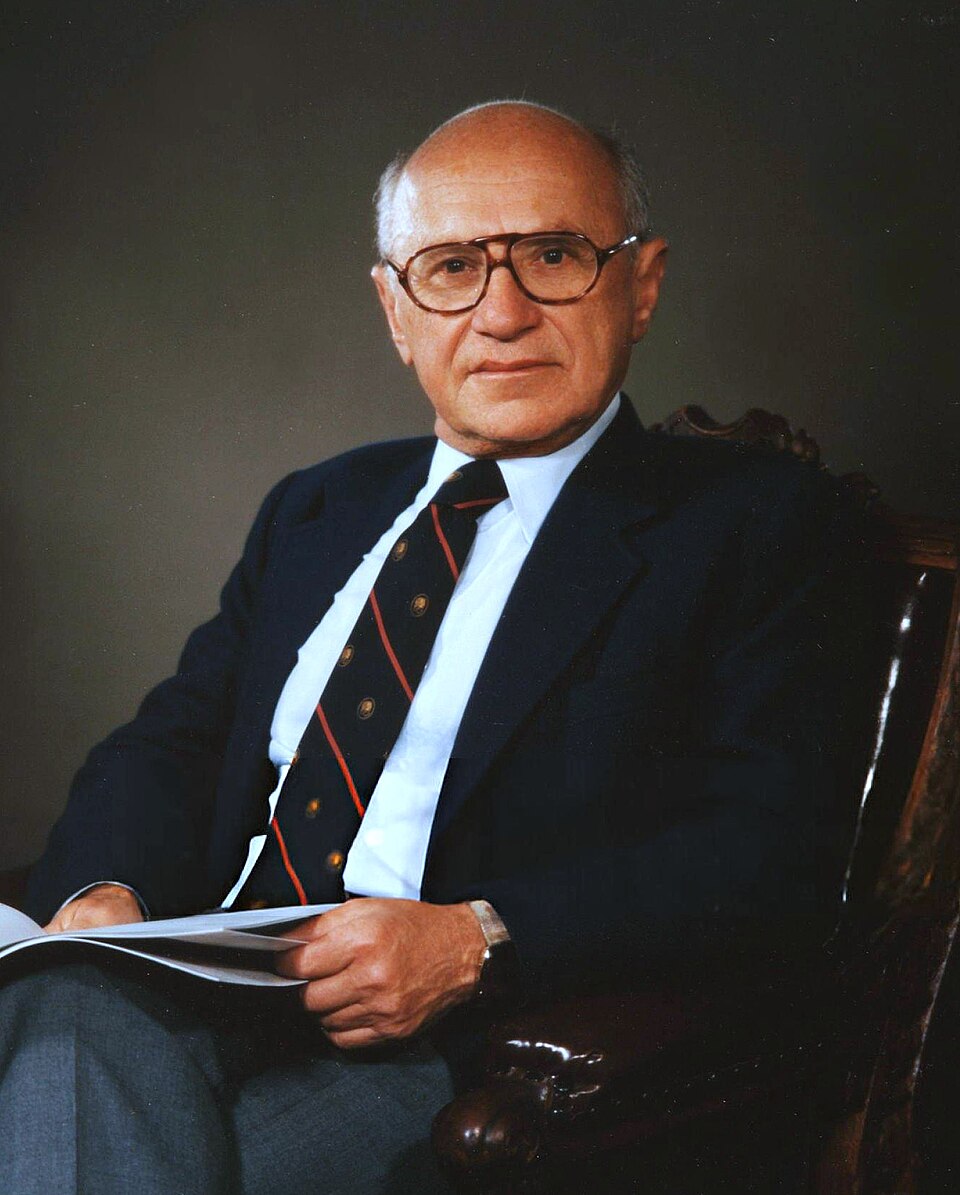
Milton Friedman
Advancing monetarism and becoming an influential advocate of free-market economic policy.
A Theory of the Consumption Function · A Monetary History of the United States
- Born
- 31 July 1912
- Birthplace
- New York City, United States
- Died
- 16 November 2006
More people

Milton Friedman
Milton Friedman was an American economist whose work on consumption and monetary history earned the 1976 economics Nobel. His arguments for limited government shaped policy debates far beyond universities.
Early life
New Jersey childhood
Grew up in Rahway in a family of immigrant shopkeepers.
University training
Studied mathematics and economics at Rutgers, then pursued graduate work at Chicago and Columbia.
Career
- 1930s–1940s
Government and statistical work
Worked on economic research and wartime statistical problems before completing his doctorate in 1946.
- 1946–1977
University of Chicago
Taught economics and became a central figure in the Chicago school.
- 1977–2006
Hoover Institution
Moved to California and continued writing, research and public policy advocacy.
Selected work
A Theory of the Consumption Function
Argued that spending depends on longer-term expected income, not simply current earnings.
A Monetary History of the United States
With Anna Schwartz, examined money and banking, including the collapse during the Great Depression.
Free to Choose
With Rose Friedman, brought his economic arguments to television and a bestselling book.
Beyond work
Rose Friedman
Married fellow economist Rose Director in 1938; she became a frequent collaborator.
Public campaigns
Advocated school vouchers and an all-volunteer military, extending his market arguments into education and public life.
Sources & photo credit
Life, career and references ↗Institutional biography and research ↗Photo: Bachrach Studios. Public domain · Original image. Cropped and displayed in monochrome.
.jpg)