Contents
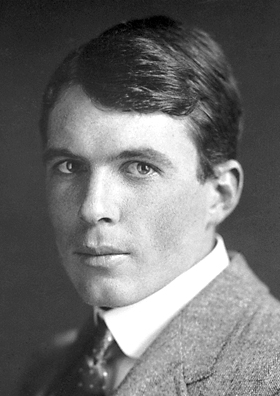
Lawrence Bragg
Using X-rays to reveal crystal structures and sharing the 1915 physics Nobel with his father at age 25.
Bragg’s law · X-rays and Crystal Structure
- Born
- 31 March 1890
- Birthplace
- Adelaide, Australia
- Died
- 1 July 1971
More people
Lawrence Bragg
Lawrence Bragg was an Australian-born physicist whose explanation of X-ray diffraction helped make the arrangement of atoms measurable. With his father William Henry Bragg, he established a foundation of crystallography, later important to chemistry and molecular biology.
Early life
Scientific family
Grew up in Adelaide, where his father taught physics and mathematics.
Adelaide and Cambridge
Graduated from Adelaide before studying natural sciences at Trinity College, Cambridge.
Career
- 1912–1915
Crystal investigations
Explained X-ray diffraction and collaborated with his father on crystal structures.
- 1919–1937
Manchester professor
Led physics research at Manchester after wartime sound-ranging work.
- 1938–1953
Cavendish Laboratory
Directed the Cambridge laboratory during major developments in molecular structure.
- 1950s–1960s
Royal Institution
Promoted protein crystallography and public science education.
Contributions
Bragg’s law
Related X-ray wavelength and scattering angle to the spacing of atomic planes.
X-rays and Crystal Structure
Co-authored an influential account of the new method.
Physics Nobel
Shared the award with William Henry Bragg for analysing crystals using X-rays.
Beyond physics
Wartime sound ranging
Helped locate enemy artillery from the sound of gunfire during the First World War.
Natural-history interests
Collected shells and maintained a lasting interest in the natural world.
Sources & photo credit
Life, career and references ↗Institutional biography and career record ↗Photo: Nobel foundation. Public domain · Original image. Cropped and displayed in monochrome.
