Contents
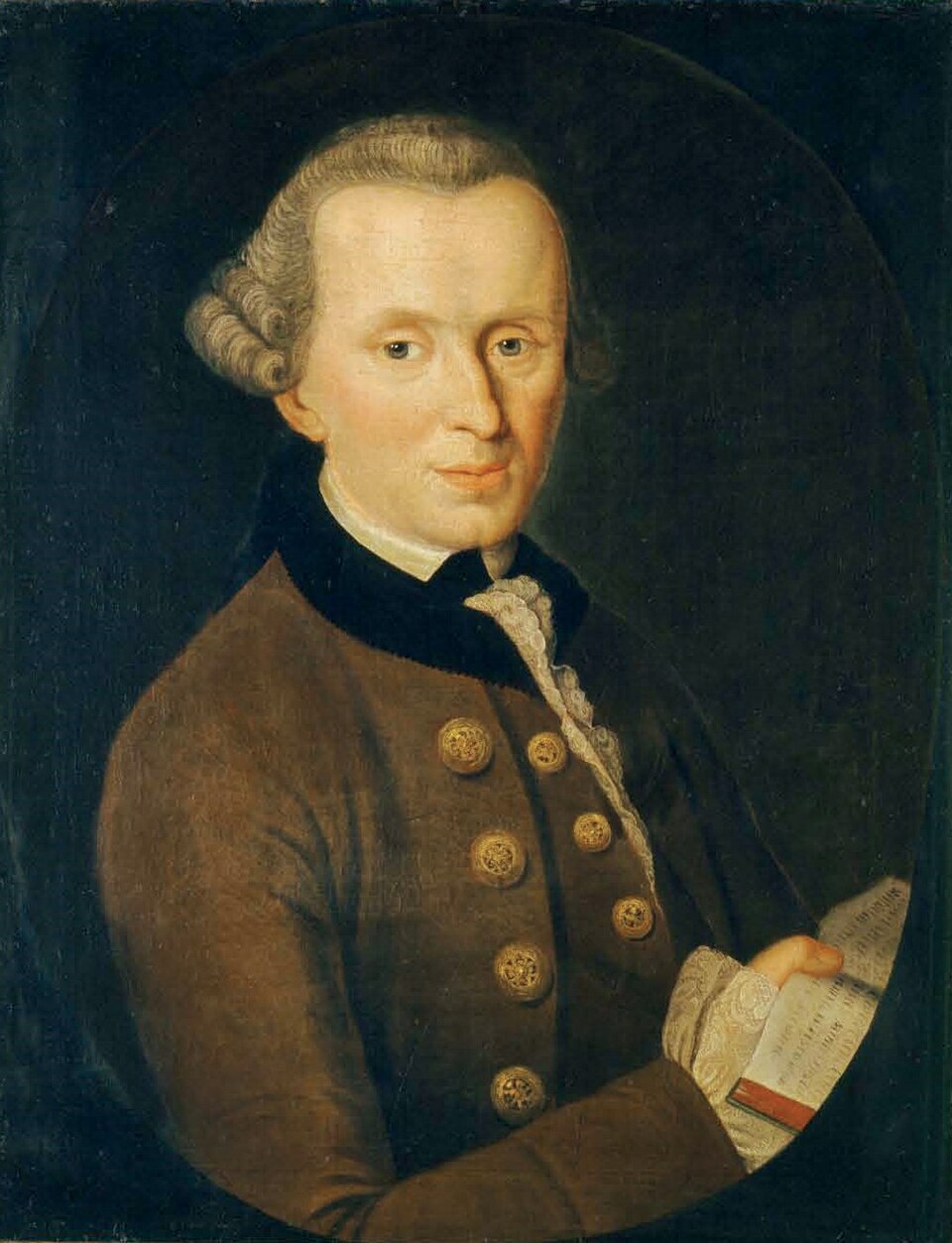
Immanuel Kant
Reshaping philosophy’s accounts of knowledge, moral duty and human freedom.
Critique of Pure Reason · Groundwork of the Metaphysics of Morals
- Born
- 22 April 1724
- Birthplace
- Königsberg, Prussia (now Kaliningrad, Russia)
- Died
- 12 February 1804
More people
Immanuel Kant
Immanuel Kant was a German philosopher who asked what reason can know and how people ought to act. His critical philosophy became a major reference point for later debates about ethics and experience.
Early life
Artisan family
His father made harnesses; he received a Pietist religious education.
University study
Entered the University of Königsberg in 1740.
Career
- 1740s–1750s
Private tutor
Worked as a tutor before returning to university life.
- 1755
Lecturer
Began teaching a broad range of subjects in Königsberg.
- 1770
Professorship
Became professor of logic and metaphysics and developed his mature philosophical system.
Selected work
Critique of Pure Reason
Investigates the conditions and limits of knowledge.
Groundwork of the Metaphysics of Morals
Sets out an influential account of moral duty.
Perpetual Peace
Proposes principles for a peaceful international order.
Beyond work
A local life
Spent his career in and around Königsberg.
Contradictory legacy
His writings also contain racial hierarchies sharply at odds with the universalism associated with his ethics.
Sources & photo credit
Biography ↗Life and work ↗Photo: Johann Gottlieb Becker (1720-1782). Public domain · Original image. Cropped and displayed in monochrome.
