Contents
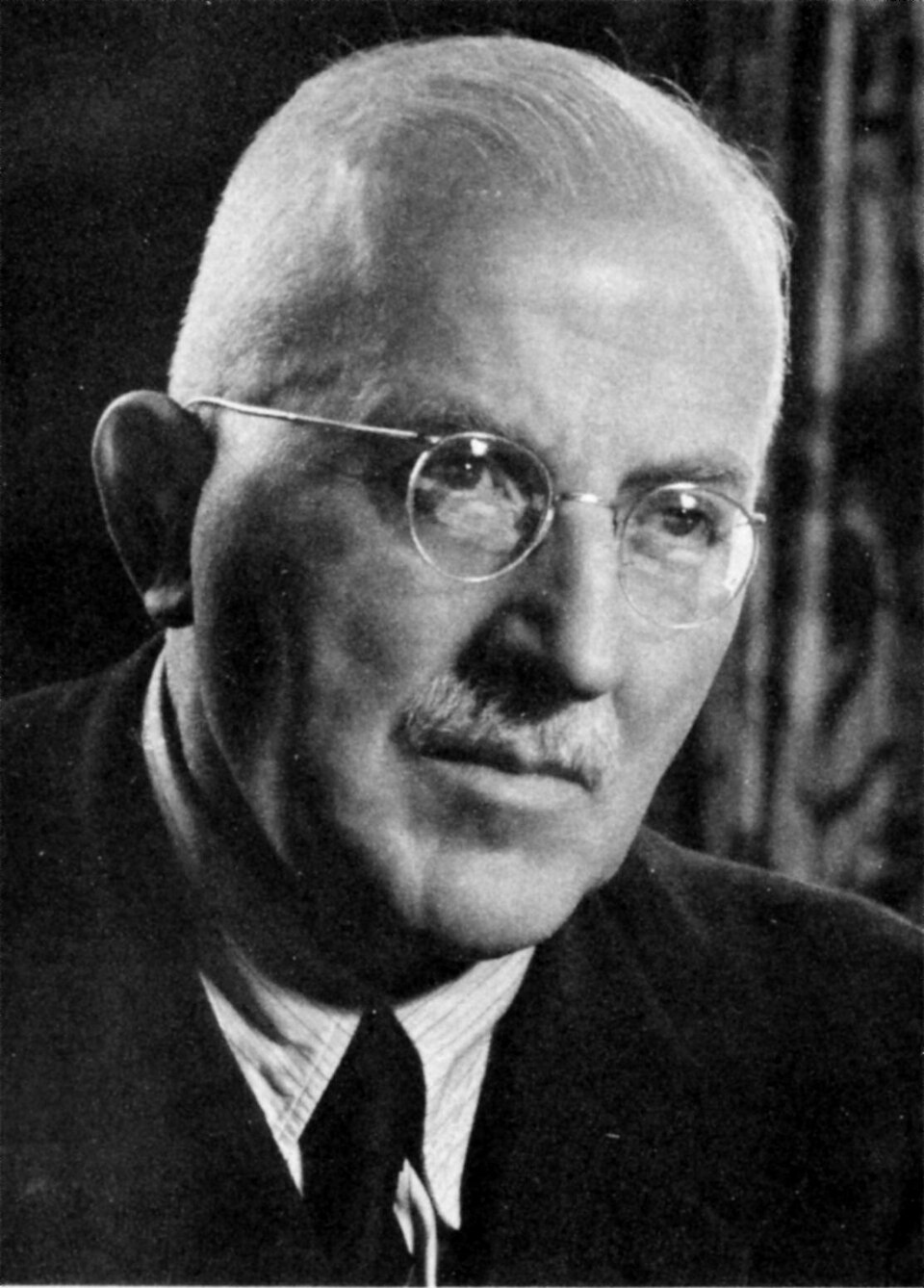
Hermann Staudinger
Establishing that polymers are long chains of chemically bonded units.
Macromolecular hypothesis · High-molecular organic compounds
- Born
- 23 March 1881
- Birthplace
- Worms, Germany
- Died
- 8 September 1965
More people
Hermann Staudinger
Hermann Staudinger was a German chemist whose work helped establish polymer science. His explanation of large molecules challenged the prevailing view that they were loose collections of smaller molecules.
Early life
Scientific beginnings
Initially hoped to become a botanist.
University studies
Studied in Halle, Darmstadt and Munich before completing his doctorate in 1903.
Career
- 1907
Karlsruhe
Became a professor of organic chemistry.
- 1912
Zurich
Moved to the Swiss Federal Institute of Technology.
- 1926
Freiburg
Joined the university where he spent the remainder of his career.
Contributions
Macromolecular hypothesis
Proposed that rubber and other polymers consist of long covalently bonded chains.
High-molecular organic compounds
Published a major treatment of rubber, cellulose and related substances.
Nobel Prize in Chemistry
Recognised for discoveries in macromolecular chemistry.
Beyond the lab
Scientific partnership
His second wife, botanist Magda Woit, collaborated on his research and publications.
Memoirs
Published recollections of his working life in 1961.
Sources & photo credit
Life, career and references ↗Nobel biography ↗Photo: Nobel Foundation. Public domain · Original image. Cropped and displayed in monochrome.
