Contents
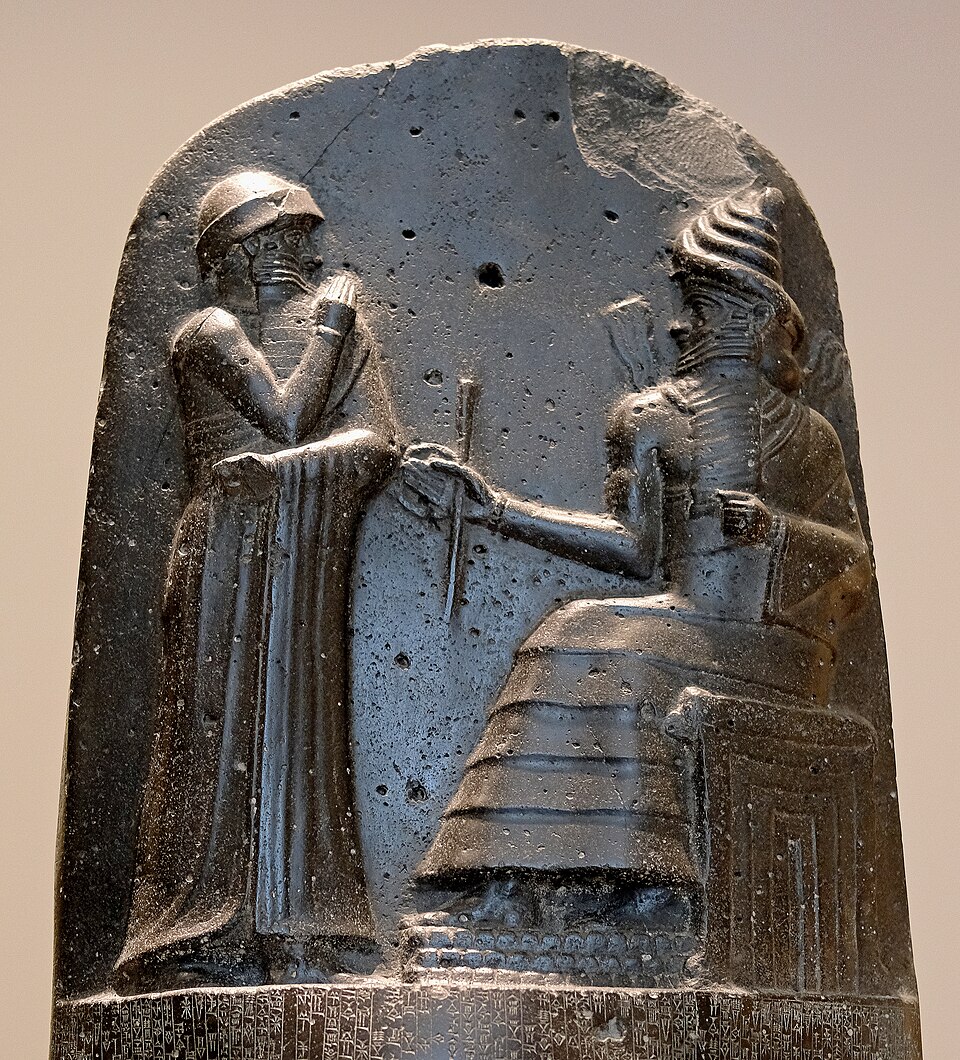
Hammurabi
Issuing the law collection known as the Code of Hammurabi.
Territorial expansion · Royal administration
- Born
- Unknown
- Birthplace
- Mesopotamia
- Died
- Unknown
More people



Hammurabi
Hammurabi was a Babylonian king of the eighteenth century BCE who expanded his kingdom across much of Mesopotamia. His law collection preserves a detailed picture of power, property and social hierarchy.
Early life
Royal family
Succeeded his father, Sin-Muballit, as ruler of Babylon.
Regional setting
Grew up when Babylon competed with several powerful neighbouring kingdoms.
Career
- Eighteenth century BCE
Accession
Inherited the Babylonian kingdom.
- Later reign
Military expansion
Defeated rival states including Larsa and brought much of Mesopotamia under his rule.
- End of reign
Succession
Was succeeded by his son Samsu-iluna.
Public record
Territorial expansion
Made Babylon a leading power in Mesopotamia.
Royal administration
Oversaw irrigation and state affairs documented in surviving letters.
Law collection
Set out judgements concerning property, family, work and punishment.
Beyond work
Unequal penalties
The law collection treated people differently according to their social status.
Later discovery
The famous inscribed stele was recovered at Susa and is now held by the Louvre.
Sources & photo credit
Life, career and references ↗Further biography and career ↗Photo: Mbzt — historical relief: Hammurabi stands on the left; Shamash is seated on the right. CC BY 3.0 · Original image. Cropped and displayed in monochrome.
