Contents
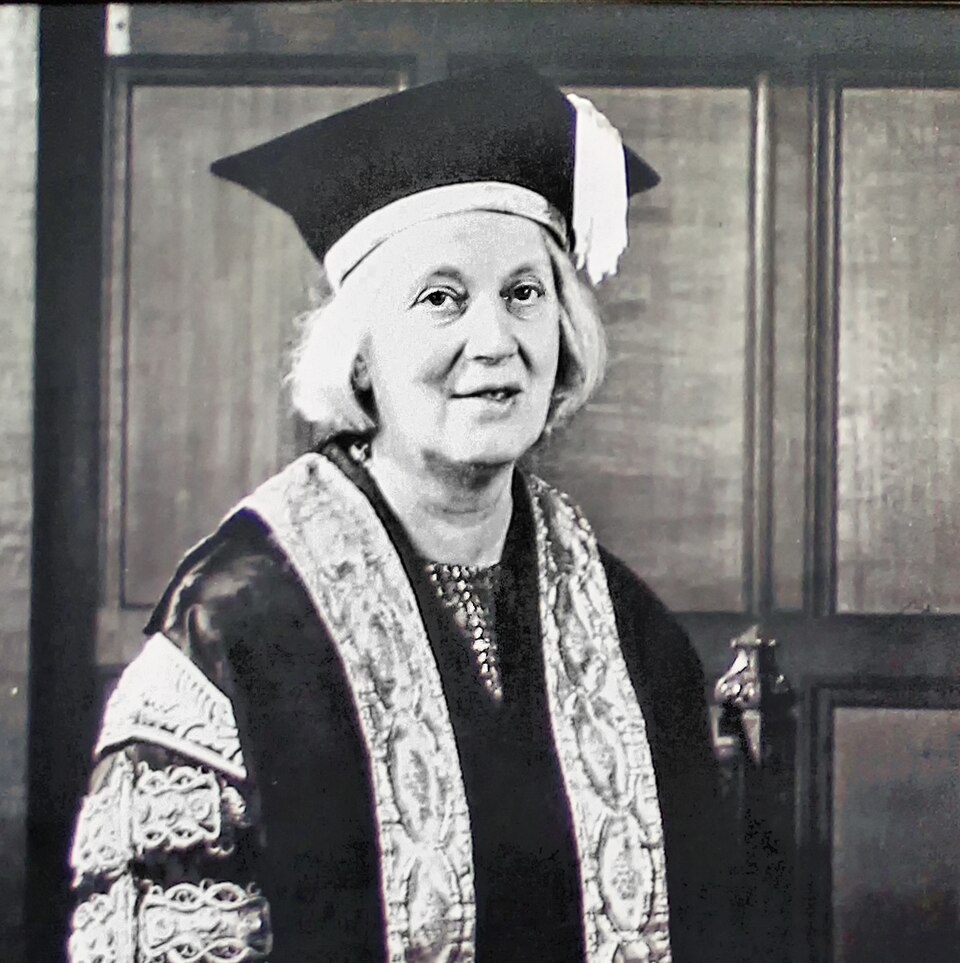
Dorothy Hodgkin
Using X-rays to reveal the structures of penicillin, vitamin B12 and insulin.
Penicillin · Insulin
- Born
- 12 May 1910
- Birthplace
- Cairo, Egypt
- Died
- 29 July 1994
More people
Dorothy Hodgkin
Dorothy Hodgkin was a British chemist who used crystallography to determine the shapes of complex biological molecules. She received the 1964 Nobel Prize in Chemistry.
Early life
Archaeology and crystals
Born to parents involved in archaeology and education, she developed an interest in crystals as a child.
Oxford and Cambridge
Studied chemistry at Somerville College, Oxford, then conducted doctoral research with J. D. Bernal at Cambridge.
Career
- 1934
Oxford research
Returned to Oxford and built a career studying biological molecules with X-rays.
- 1940s–1950s
Complex structures
Her group worked out structures including penicillin and vitamin B12.
- 1964
Chemistry Nobel
Received the prize for determining important biochemical structures.
- 1969
Insulin solved
Her team established insulin’s structure after decades of work.
Contributions
Penicillin
Clarified the structure of an important antibiotic.
Vitamin B12
Solved a molecule far more complex than many previous crystallographic targets.
Insulin
Revealed the three-dimensional structure of the hormone.
Beyond the lab
Living with arthritis
Developed rheumatoid arthritis as a young adult and continued her laboratory career despite its effects.
Peace advocacy
Served as president of the Pugwash Conferences, supporting dialogue over nuclear weapons and international security.
Sources & photo credit
Life, career and references ↗Nobel Prize biography and award ↗Photo: University of Bristol. CC BY-SA 2.5 · Original image. Cropped and displayed in monochrome.
