Contents
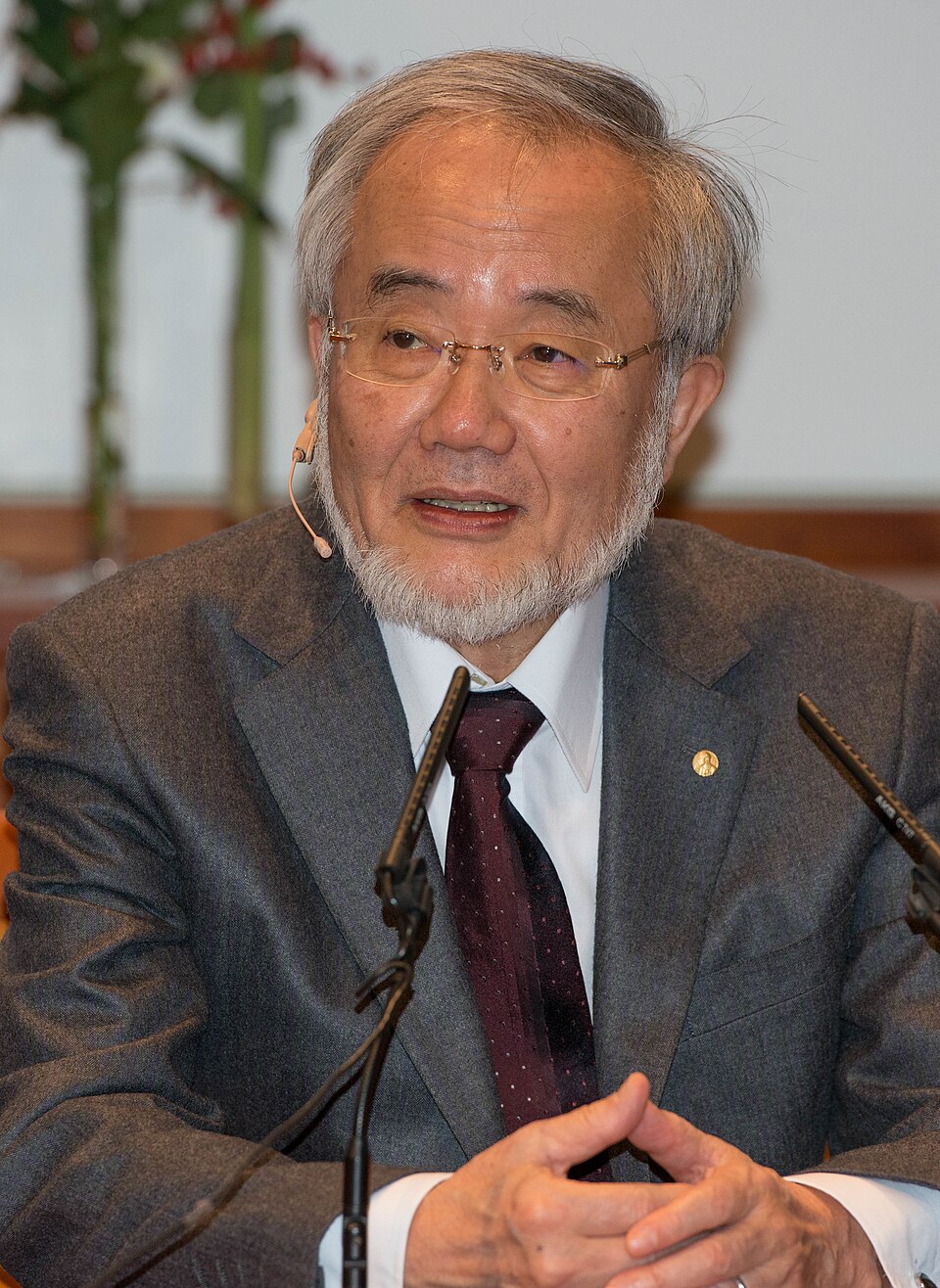
Yoshinori Ohsumi
Revealing how cells dismantle and recycle their own components through autophagy.
Autophagy · Nobel Prize 2016
- Born
- 9 February 1945
- Birthplace
- Fukuoka, Japan
More people
Yoshinori Ohsumi
Yoshinori Ohsumi is a Japanese cell biologist whose experiments with yeast uncovered machinery that cells use to recycle material. He received the 2016 Nobel Prize in Physiology or Medicine.
Early life
Fukuoka childhood
Born into an academic family, he grew up in Japan after the Second World War.
Tokyo training
Studied at the University of Tokyo, earning his doctorate in 1974 before research at Rockefeller University.
Career
- 1977
Back in Tokyo
Returned to Japan and investigated the yeast vacuole, a compartment that breaks down cellular material.
- 1988
Independent laboratory
Established a small research group at the University of Tokyo.
- 1993
Autophagy genes
His group identified genes essential to the recycling process in yeast.
- 2016
Nobel recognition
Received the medicine prize for discoveries of autophagy mechanisms.
Contributions
Watching recycling
Made material accumulating inside yeast vacuoles visible under the microscope.
Genetic machinery
Used mutant yeast to identify essential autophagy genes.
A shared cellular process
Helped establish a foundation for studying related mechanisms in human cells.
Beyond the lab
Basic research
Has defended curiosity-driven science whose usefulness may not be immediately apparent.
Research support
Established the Ohsumi Frontier Science Foundation to support fundamental biological research.
Sources & photo credit
Life, career and references ↗Nobel Prize biography and award ↗Photo: Bengt Nyman from Vaxholm, Sweden. CC BY 2.0 · Original image. Cropped and displayed in monochrome.
_(cropped).jpg)