Contents
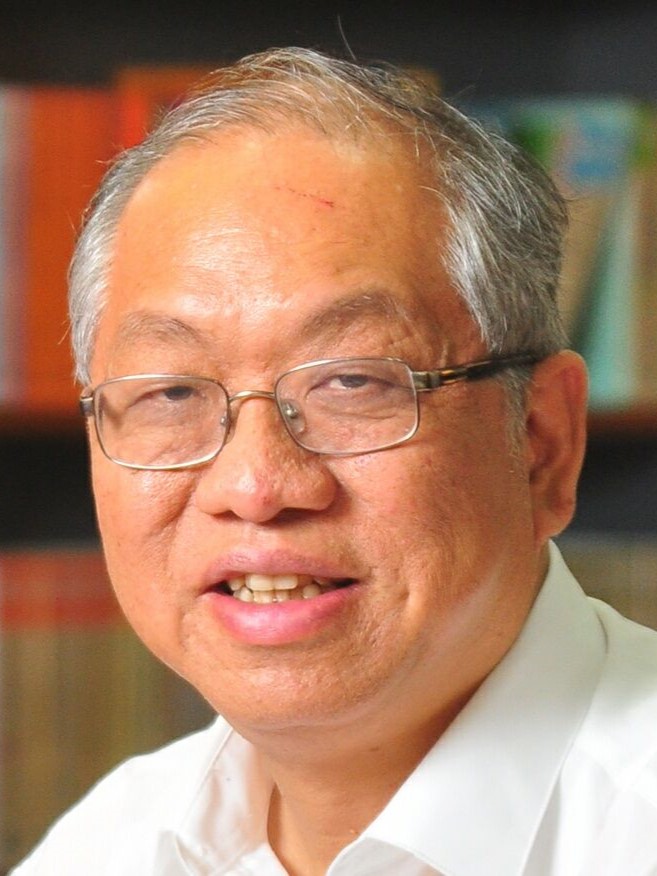
Shing-Tung Yau
Proving the Calabi conjecture and transforming the study of curved spaces through geometric analysis.
Calabi conjecture · Positive mass theorem
- Born
- 4 April 1949
- Birthplace
- Guangdong, China
More people
Shing-Tung Yau
Shing-Tung Yau uses differential equations to investigate geometry. His proof of the Calabi conjecture revealed spaces that became important in both mathematics and theoretical physics, and his wider research earned the 1982 Fields Medal.
Early life
Hong Kong upbringing
His family moved from mainland China to Hong Kong when he was an infant.
From Hong Kong to Berkeley
Studied at the Chinese University of Hong Kong before completing a Berkeley doctorate under Shiing-Shen Chern in 1971.
Career
- 1970s
Early appointments
Worked at the Institute for Advanced Study, Stony Brook and Stanford while developing geometric analysis.
- 1979–1987
Research centres
Returned to the Institute for Advanced Study and later taught at the University of California, San Diego.
- 1987–2022
Harvard and Tsinghua
Spent decades at Harvard before moving to a full-time role at Tsinghua University.
Contributions
Calabi conjecture
Established the existence of special metrics on important classes of complex spaces.
Positive mass theorem
With Richard Schoen, proved a central result connecting geometry and general relativity.
Fields Medal
Recognised for contributions to differential geometry and partial differential equations.
Beyond mathematics
Mathematical communities
Helped establish research institutes and support young mathematicians in China and internationally.
Writing for wider audiences
Co-authored books explaining geometry’s relationship to physics and recounting his own mathematical journey.
Sources & photo credit
Life, career and references ↗Institutional biography and research ↗Photo: Academia Sinica. Attribution · Original image. Cropped and displayed in monochrome.
