Contents
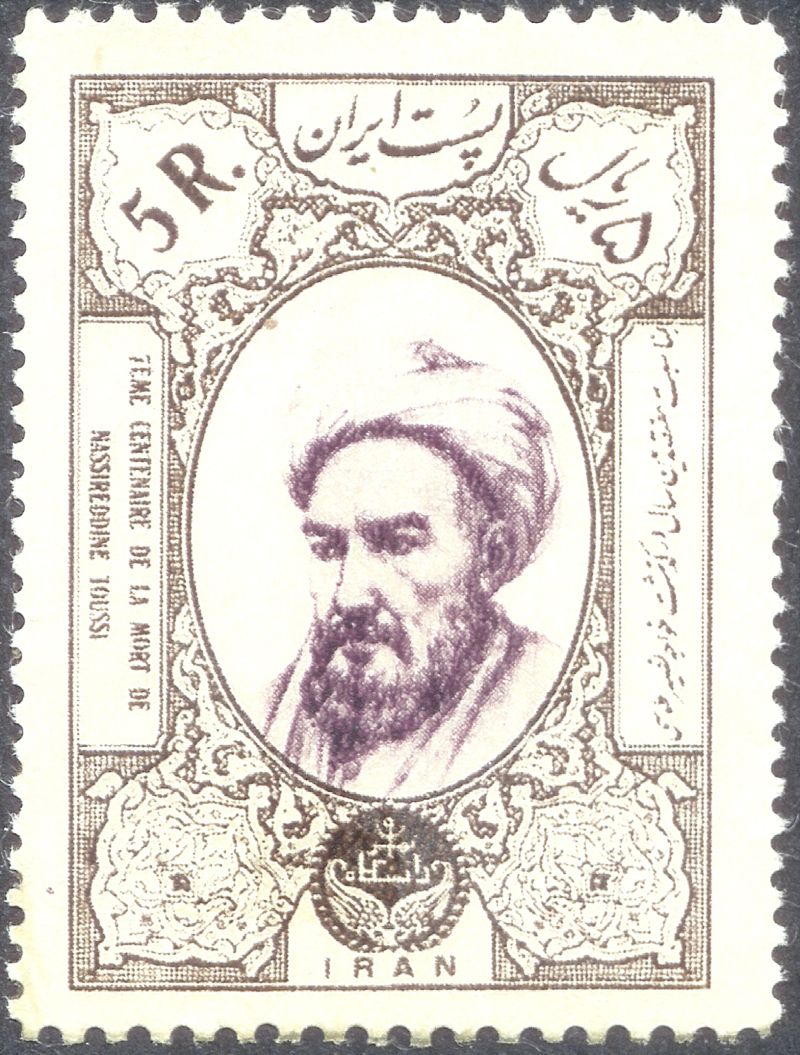
Nasir al-Din al-Tusi
Developing trigonometry and planetary models, and establishing the great observatory at Maragha.
Treatise on the Quadrilateral · Tusi couple
- Born
- 18 February 1201
- Birthplace
- Tus, Iran
- Died
- 26 June 1274
More people
Nasir al-Din al-Tusi
Nasir al-Din al-Tusi was a Persian scholar whose work crossed mathematics, astronomy, philosophy and theology. He lived through the Mongol conquests and secured patronage for an observatory that brought scholars and astronomical observations together.
Early life
A scholarly education
Began studying in Tus before travelling to centres including Nishapur for advanced learning.
Multiple disciplines
His education encompassed religious scholarship as well as mathematics, logic and astronomy.
Career
- 1230s–1256
Ismaili patronage
Worked in fortified scholarly communities and produced writings on ethics and science.
- 1256–1259
Mongol court
Entered Hulagu’s service after the fall of the Ismaili strongholds.
- 1259–1274
Maragha observatory
Directed a major programme of observation, calculation and scholarly collaboration.
Contributions
Treatise on the Quadrilateral
Presented plane and spherical trigonometry as a mathematical subject in its own right.
Tusi couple
Demonstrated how combined circular motions can generate straight-line motion.
Ilkhanic Tables
Compiled astronomical tables based on the Maragha programme.
Beyond mathematics
Ethics and society
His Nasirean Ethics considered personal conduct, household life and political organisation.
Scholarship amid conquest
His career depended on patrons on opposing sides of the Mongol conquests; accounts of his precise political role differ.
Sources & photo credit
Life, career and references ↗Institutional biography and research ↗Photo: See source; historical depiction, not a contemporary photograph. Public domain · Original image. Cropped and displayed in monochrome.
